Miyakojima 3-Day and 4-Day Itineraries | Routes by Trip Length

Updated:

Use the six areas in the Miyakojima overview to plan each day from arrival to departure. Choosing one main direction per day reduces time spent travelling back and forth between distant areas. Reorder the days when your airport, flight times, transport or sea conditions change.

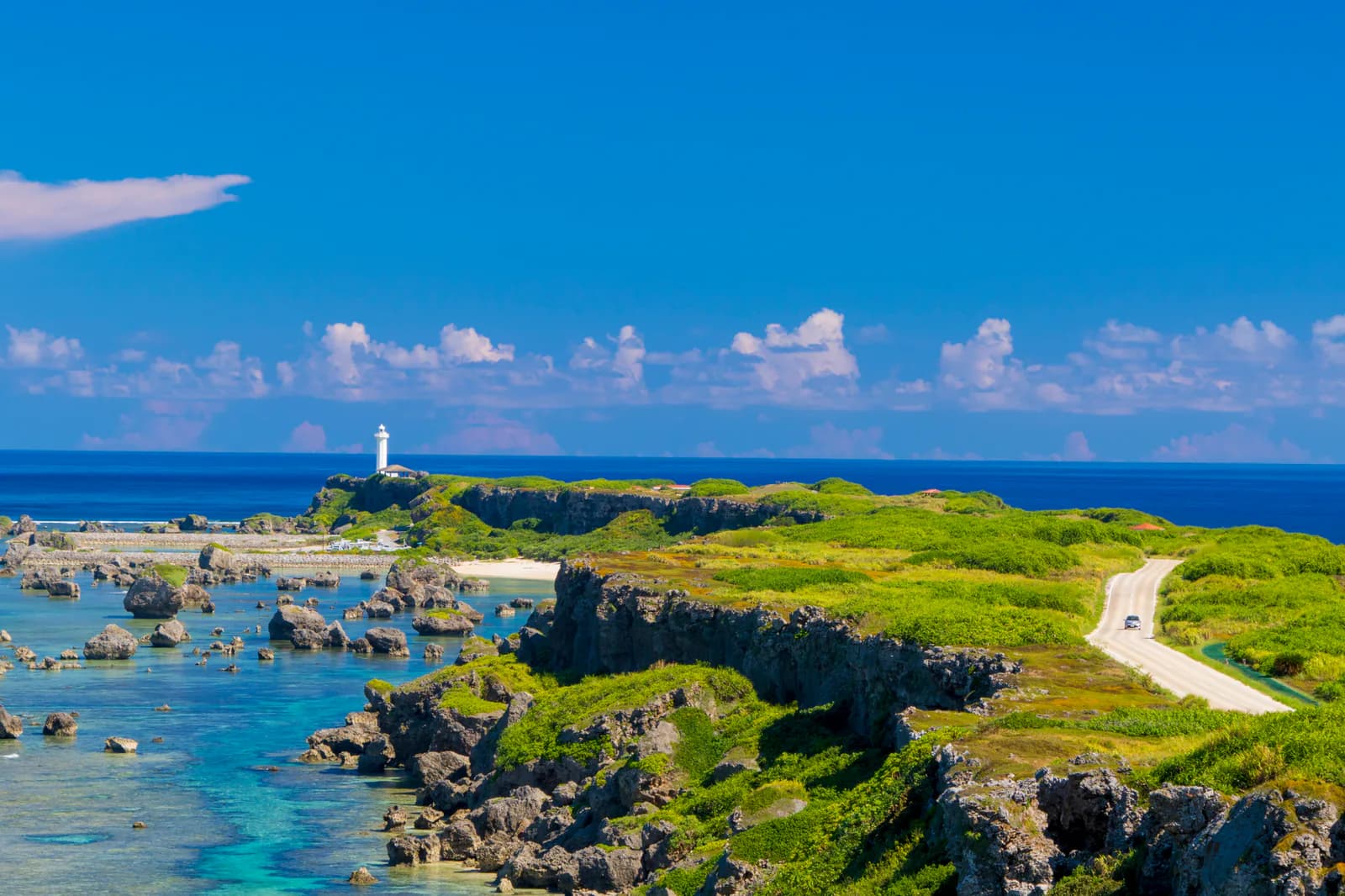
A walking path along Cape Higashi-Hennazaki and the surrounding sea

Cape Higashi-Hennazaki in Gusukube. Group nearby stops in the same direction, with one main area per day.

“Cape Higashi-Hennazaki” — Raita Futo / Wikimedia Commons / CC BY 2.0 (resized and converted to WebP) · Creative Commons Attribution 2.0 Generic

1.Two nights or three nights?

Compare how many full days you have between arrival and departure before comparing the number of nights.

2 nights / 3 days: choose a main area

Usually only one day is fully available. An afternoon arrival or morning departure further reduces the time on the first or last day.

Choose one main area for the full day and keep arrival and departure days within central Hirara or easy reach of your airport.

If you book a marine activity, choose an indoor or town-based alternative in advance. There is limited room to move it to another day.

3 nights / 4 days: separate different areas

Usually two full days are available. As with a two-night trip, usable time still depends on arrival and departure times.

Assign the two full days to different areas, for example Gusukube on one day and Irabu–Shimojishima on the other.

A marine activity can more easily move between days 2 and 3. Leave time free on both days instead of filling every slot.

2.Assumptions behind these itineraries

These standard examples use the conditions below so that you can see what to change for a different airport or accommodation.

Use a rental car

Include airport pickup and return time in the itinerary. Decide who drives, where to park and where to refuel in advance.

Stay at the same accommodation

Avoid changing accommodation to reduce time moving luggage. The standard examples use the central Hirara area as a base for arranging meals and transport.

Keep arrival and departure days local

Use arrival day for collecting the car and the area around your accommodation. On departure day, stay within easy reach of the airport. Reduce stops for a late arrival or early departure.

One main direction each day

Group nearby places instead of crossing between the north, east/southeast, southwest and Irabu–Shimojishima in the same day.

Adjust to your accommodation and airport

For accommodation outside town, move the nearby area to arrival or departure day. When using Shimojishima Airport, place Irabu–Shimojishima on the airport-side day.

3.2-night / 3-day itinerary

Keep the first and last days local and give the one full day to a single main area. This standard example groups day 2 around Gusukube. If the north, southwest or Irabu–Shimojishima is your priority, replace day 2 with that area.

Day 1: Arrival and the area around your accommodation

Area: Your airport and central Hirara

Afternoon
Collect your rental car after landing and travel to your accommodation. With an afternoon arrival, avoid distant destinations; check the vehicle controls, return location and refuelling requirements at pickup.
Evening
Have dinner and shop in central Hirara, then check the next morning's weather, wind, waves and messages from any booked activity operator.
When to change the plan
If arrival is delayed, reduce even the stops in town and prioritise reaching your accommodation.

Day 2: Keep eastern and southeastern sights in one area

Area: Gusukube

Morning
Head to Cape Higashi-Hennazaki and allow time to walk along the cape. Check local weather and road conditions before leaving.
Afternoon
Combine a meal in Gusukube with sights in the same eastern or southeastern area, such as Imgya Marine Garden. Decide whether to enter the sea from local sea conditions and swimming restrictions.
Evening
Return to your accommodation in central Hirara. Do not add a first visit to an unfamiliar remote place after dark.
When to change the plan
If a marine activity is the priority, build the day around its location. Do not add Cape Higashi-Hennazaki or other stops from a different area.

Day 3: Stay within easy reach of the airport, then depart

Area: Central Hirara and your airport's surroundings

Morning
Only if your departure time allows it, choose food, shopping or a cultural facility in central Hirara after checking its opening days.
Afternoon
Leave time for refuelling, returning the rental car, reaching the airport and check-in. Do not schedule sightseeing before an early departure.
When to change the plan
Do not add a distant sightseeing detour across a bridge on the final day. Stay within a range that allows a return to the airport even if delays or road conditions change.

4.3-night / 4-day itinerary

Use the two full days for Gusukube and Irabu–Shimojishima separately. Keep days 2 and 3 interchangeable so that a marine activity can move to the day with better conditions.

Day 1: Arrival and the area around your accommodation

Area: Your airport and central Hirara

Afternoon
Prioritise arrival, rental-car pickup and the journey to your accommodation. Even with a morning arrival, choose central Hirara or somewhere near your accommodation instead of a return trip to a distant area.
Evening
After dinner, compare weather, wind, waves and bridge information for days 2 and 3, then decide which day to use for a marine activity.
When to change the plan
From Shimojishima Airport, prioritise the western side; from Miyako Airport, follow the route from central Miyakojima towards your accommodation. Avoid travelling to the opposite side and back.

Day 2: Eastern and southeastern scenery

Area: Gusukube

Morning
Make Cape Higashi-Hennazaki the main destination and allow walking time. Check the notices for the day of your visit for facility and walking-path access conditions.
Afternoon
Eat in Gusukube, then choose scenery or a marine activity in the same area, such as Imgya Marine Garden.
Evening
Check the following day's Irabu Bridge and sea conditions, then return to your accommodation.
When to change the plan
If conditions on the eastern coast are unsuitable, move the marine activity to day 3 and use this day for scenery, culture and food.

Day 3: The western route through Irabu and Shimojishima

Area: Irabu and Shimojishima

Morning
Check Irabu Bridge's traffic status, head west and travel through Irabu to Shimojishima. Do not stop on the bridge.
Afternoon
Limit visits to Irabu and Shimojishima, for example Toriike Pond. For a booked marine activity, prioritise the operator's meeting point and decision on whether it can go ahead.
Evening
Finish with enough daylight for the return journey, taking bridge conditions into account, and return to your accommodation in central Hirara.
When to change the plan
Do not cross if strong winds or bridge restrictions are expected. Swap with day 2 or visit cultural facilities on Miyakojima itself.

Day 4: A short route on the airport side, then departure

Area: Central Hirara and the side of your departure airport

Morning
Only if flight time allows, choose food, shopping or a cultural facility close to the route from your accommodation to the airport.
Afternoon
Refuel and return the rental car, then follow your airline and airport's instructions for check-in.
When to change the plan
Arrange the order towards Miyakojima for Miyako Airport, or towards Irabu and Shimojishima for Shimojishima Airport. Do not travel away from your airport on the last day.

5.Which areas to combine

Use the same six areas as the Miyakojima overview to group nearby stops and keep distant directions on different days.

Central Hirara · town area

Example: central Hirara. Use it on arrival and departure days, on car-free days, or when keeping food and shopping near your accommodation.

Do not plan to continue from here through the north, east and Irabu–Shimojishima in one day.

Ueno · south

Example: Ueno German Culture Village. Build the day around time at your accommodation and cultural facilities; if continuing to Gusukube, move east along the southern coast.

Do not add northern Miyakojima or Irabu–Shimojishima on the same day. Check facility opening information before going.

6.Adjusting for your airport and flight times

Move arrival-day and departure-day visits according to the airport's location and the time available locally.

Using Miyako Airport

Use the route from the airport in central Miyakojima to accommodation in Hirara as the starting point. Keep arrival and departure days on Miyakojima and give Irabu–Shimojishima a full day.

Departing early

Avoid sightseeing detours on the last day and allow time for refuelling, car return, airport travel and check-in. If the airport route crosses a bridge, check restrictions from the previous day and check the latest status again before leaving. A bridge being open on the outward journey does not guarantee that it will remain open for the return.

7.Adapting the itinerary without a car

Adapt the driving examples to one main area for which you can arrange both outward and return transport; do not follow the same route unchanged.

Use central Hirara as your base

Keep meals, shopping and bus or taxi connections near your accommodation. Check the distance from your accommodation to the bus stop too.

Build around activities with transfers

Check the pickup area, meeting point and start/end times. Avoid adding distant places before or after the activity, and check how to return if it is cancelled because of sea conditions.

Use taxis for particular legs

Use taxis where public transport does not easily connect the airport, accommodation and sights. Decide how to arrange the return ride instead of assuming a taxi will be available at the destination.

Avoid linking remote sights by bus alone

Check operating days, outward and return services, connections and the journey from the stop to the destination. Do not use a route that links several distant areas in one day.

8.When weather or sea conditions change

Choose both the information to check and the replacement route in advance.

A typhoon is approaching

Check JMA warnings and typhoon information, airline and airport notices, and messages from your accommodation.

Reconsider the travel plan, including arrival/departure dates and a possible extended stay, rather than just the order of sightseeing. Do not plan on going out during warnings.

Rough seas or a cancelled marine activity

Check wind and waves, the operator's decision, alternative dates and meeting-point changes. Sunshine alone does not establish whether the activity can proceed.

For three nights, swap days 2 and 3. For two nights, change to open indoor cultural facilities such as Miyakojima City Museum or the Traditional Crafts Center, crafts, food or a walk in town.

9.Booking order

Book arrangements with fixed times first, then assign each day's main area.

1. Flights

Confirm the airport and arrival/departure times to establish how many days you can use locally.

2. Accommodation

Confirm your base for consecutive nights and transport from both airports.

3. Rental car or other transport

Match pickup and return locations and times to your flights. Without a car, choose buses, taxis and transfers for each leg.

4. Activities with fixed dates and times

Check meeting points, transfers, duration, cancellation criteria and alternative dates, and leave space before and after.

5. Each day's main area

Plot the confirmed airport, accommodation, transport and activities on a map, then add remaining places using one main direction per day.

Frequently asked questions

How much can I see in two nights and three days?

Keep arrival and departure days near the airport or accommodation. For the one full day, choose a main direction such as Gusukube, the north, southwest or Irabu–Shimojishima. Reduce stops if arrival is late or departure is early, even with the same two-night stay.

What changes with three nights and four days?

Usually you gain two full days and can visit different areas on separate days. There is also room to move a marine activity between days 2 and 3. Leave time for weather changes and rest instead of only adding more stops.

Can I use these itineraries without a car?

Adapt them rather than following the same order. Base yourself in central Hirara and choose one area with return transport by an activity transfer, taxi or scheduled bus. Do not assume you can link several remote places by local bus alone.

Does the order change between Miyako and Shimojishima airports?

Yes. Place Miyakojima-side visits near arrival or departure when using Miyako Airport, and Irabu–Shimojishima visits near those days when using Shimojishima Airport. This reduces travel back in the opposite direction. Include rental-car pickup/return locations and bridge conditions in the decision.

How should I change the route for rain or strong winds?

In strong winds, check bridge restrictions and replace routes across bridges with visits on Miyakojima itself. If a marine activity is cancelled, swap the two full days on a three-night trip; on a two-night trip, choose museums, crafts or food after checking opening information. During typhoons or warnings, do not assume you can go out; also check airline, airport and accommodation notices.

Miyako Islands travel guides

Official information and sources