Miyakojima tours: snorkeling, kayaking and sightseeing
Updated:
Look for sea turtles beneath the surface, paddle to Pumpkin Cave, or explore Kurima Island after dark. These six tours take you into Miyakojima's sea, caves and island scenery.
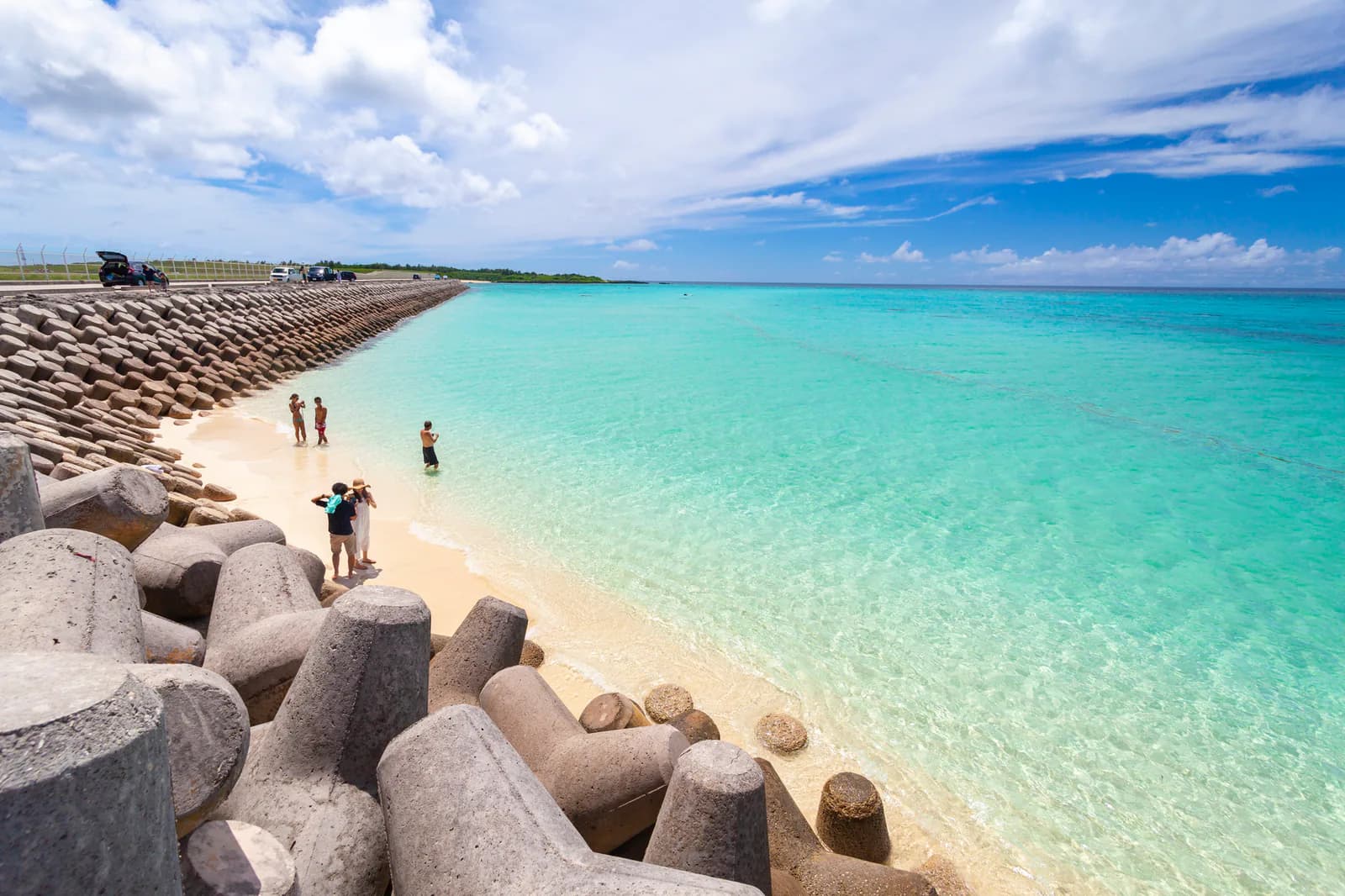
Six ways to enjoy Miyakojima
Explore the sea and caves
Explore the island after dark
Sightseeing without a car
Offshore reefs, underwater views and island crafts
Compare Yabiji tours by meeting point and age limits
Yabiji is an offshore coral-reef area beyond Ikema Island. These trips enter the water from a boat, while beach snorkeling starts from shore. If you are prone to seasickness, ask about sailing time and resting on board before booking.
Allow time for travel to and from Ikema Island and changing clothes. Without a car, arrange both journeys around the meeting time first. Leaving a buffer after arrival and before your flight makes changes for rough seas easier to manage.
Aquabase: Yabiji Course A
- Duration and format
- About 3 hours; 2–3 stops. Showers and changing rooms.
- Meeting and transfers
- Meet at the shop, Ikema 83-1. No transfers.
- Age and group size
- Ages 6–60. Book for 2 or more; 4 guests required to operate.
- Guest cancellation
- Free until 2 days before; 50% until 16:00 the day before, then 100%.
Marine Heart: half-day Yabiji
- Duration and format
- About 3 hours; listed meeting-to-finish times span 3 hours 15 minutes.
- Meeting and transfers
- Designated location near Ikema 903. Ask about transfers.
- Age and group size
- Ages 12–60, up to 90 kg, and Japanese public health insurance required. Minimum 2 adults.
- Guest cancellation
- 50% the day before; 100% on the day.
These are direct-booking terms. Ask each operator about health requirements and your preferred language. Neither charges for operator cancellation due to sea conditions. Aquabase may offer another sea area or an alternative tour: check the terms if reaching Yabiji is essential.
SeaSky Hakuai underwater sightseeing boat
Watch the underwater world from a viewing room below the surface. You stay inside the boat, making this a way to see the sea without snorkeling.
Miyakojima craft workshops
Try pottery, weaving or dyeing at the workshops in the tropical botanical garden. Spend part of the day making something of your own on the island.
Wear a life jacket, stay with others and follow the day's sea conditions. For a marine emergency, call 118.
Before sea and nature activities
Wear a life jacket and avoid going alone
Wear a life jacket at sea, stay in a group of at least two, and keep children under constant supervision. Do not swim or enter the sea after drinking alcohol, when short of sleep or when tired.
Check wind, waves and lightning, and be prepared to cancel
Check the forecast, wind and tides beforehand, and do not enter the sea in high waves or bad weather. SUP boards can be carried away by wind. Strong winds, lightning and high waves also require caution on the shore.
For incidents or accidents at sea, call 118
Report an accident at sea or request a marine rescue by calling 118 without an area code.
Do not chase turtles or touch coral
Do not chase or touch sea turtles, or feed marine life. Do not stand on coral or kick it with fins. During night observation, do not collect or damage plants or animals, and take your rubbish with you.
Follow cave conservation rules and respect the sacred site
At Pumpkin Cave, do not touch stalactites or enter restricted areas. The surrounding area is a place of worship. The conservation and use agreement prohibits signatory operators from running trips that walk through the sea to the cave, and specifies using kayaks or SUP boards.
Diving qualifications and flights
Introductory diving and dives for certified divers have different requirements. Allow the operator's required interval before flying after a dive; leave diving out of your departure day.
- Miyakojima City: precautions before swimming and the marine emergency number ↗
- Japan Coast Guard: snorkeling equipment, basic skills and group safety ↗
- Miyakojima Tourism Association: sea conditions, life jackets and fitness ↗
- Miyakojima Tourism Association: turtle, coral and nature-observation guidelines (PDF) ↗
- Okinawa Prefecture: Bora Kubakundai Cave conservation and use agreement (PDF) ↗
- Miyakojima City: guidance on operators participating in the cave conservation agreement ↗
- Okinawa Prefectural Police: Maruyu-designated and notified marine operators ↗
Frequently asked questions
Can I participate if I cannot swim?
It depends on the activity and operator's conditions. Explain your concerns about water and your swimming experience, and discuss practice and assistance. The availability of a buoyancy aid alone does not establish that you can participate.
Can children or older adults participate?
Age limits differ by plan. Choose a plan whose health requirements, correctly fitting equipment, parental-accompaniment rules and other conditions are met by everyone in your group.
Will the activity run in rain?
Rain alone does not determine this. The operator considers wind, waves, lightning and tides and may change the meeting point or activity, or cancel it.
Are sea-turtle sightings guaranteed?
No. Sea turtles are wild animals, so encounters are not guaranteed. You may not find any; if you do, do not chase or touch them.
Miyako Islands travel guides
Official information and sources
- Miyakojima City: precautions before swimming and the marine emergency number ↗
- Japan Coast Guard: snorkeling equipment, basic skills and group safety ↗
- Miyakojima Tourism Association: sea conditions, life jackets and fitness ↗
- Miyakojima Tourism Association: turtle, coral and nature-observation guidelines (PDF) ↗
- Okinawa Prefecture: Bora Kubakundai Cave conservation and use agreement (PDF) ↗
- Miyakojima City: guidance on operators participating in the cave conservation agreement ↗
- Okinawa Prefectural Police: Maruyu-designated and notified marine operators ↗
- CODE SEA: beach snorkeling: Check beach-snorkeling details and participation conditions ↗
- Marine Heart: Yabiji snorkeling: Check Yabiji itinerary, health requirements and meeting point ↗
- Marine Support Tide Miyako: kayaking and cave tour: Check cave-tour tides, meeting point and participation conditions ↗
- Lulu Miyakojima: sunset SUP: Check SUP duration, transfers and age requirements ↗
- Miyakojima Photo Tours: coconut-crab exploration: Check night-observation arrangements and transfer plans ↗
- Nami Miyakojima: sightseeing tour: Check sightseeing itinerary and pickup arrangements ↗
- CODE SEA: beach snorkeling: Additional operator information ↗
- Marine Support Tide Miyako: kayaking and cave tour: Additional operator information ↗
- Read PADI's introductory-diving advice and precautions ↗
- Read about C-cards and diving appropriate to your experience ↗
- Check Sea Sky Hakuai boarding and service notices ↗
- View Craft Village workshops and booking contacts ↗