Kume Shosen | From Tomari Port in Naha
Tonaki Island Ferry: 2026 Timetable, Fares, Phone Booking and Day-Trip Conditions
The ferry from Tomari Port in Naha to Tonaki Port takes 1 hr 55 min. Whether a day trip from Naha is possible depends on whether the same day's afternoon Kume Island–Naha service calls at Tonaki Port.
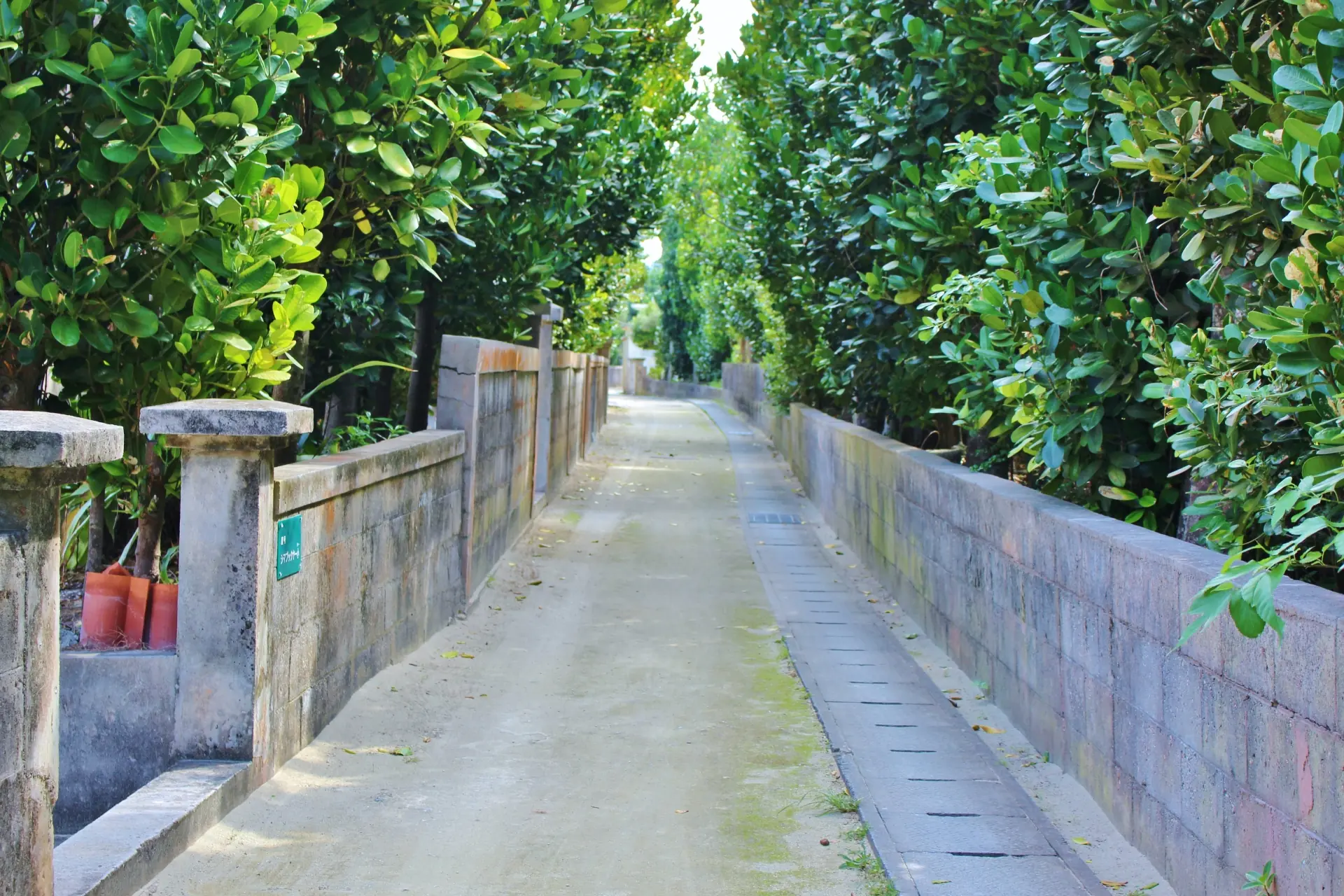
Route and vessels
- Outbound: Tomari Port in Naha → Tonaki Port → Kanegusuku Port on Kume Island
- Return: Kanegusuku Port on Kume Island → Tonaki Port → Tomari Port
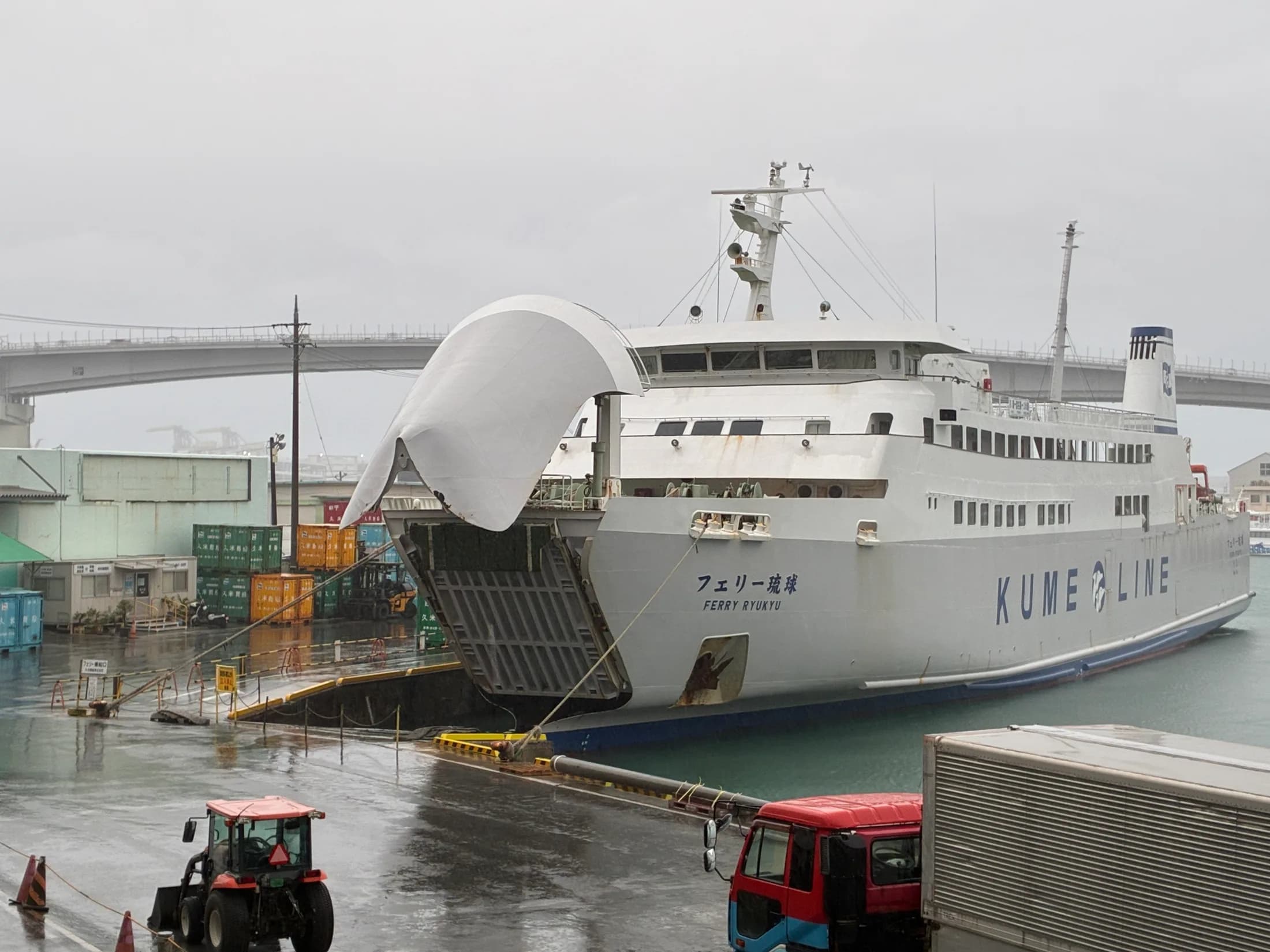
- Vessels: Ferry Ryukyu and Ferry Kaiho. Kume Shosen Co., Ltd. operates the two vessels alternately and selects the vessel for each sailing. Passengers cannot choose the vessel.
- Travel times: 1 hr 55 min from Naha to Tonaki and 1 hr 20 min from Tonaki to Kume Island.
Key timetable, booking and operating details
- Travel time
- Tomari Port–Tonaki Port: 1 hr 55 min
- Basic service
- Departs 09:00; arrives at Tonaki 10:55
- Same-day operation
- Use Kume Shosen's announcement at about 07:30 as the basis
Services calling at Tonaki Island
Only services with published arrival and departure times at Tonaki Port are shown. A dated dock or special timetable takes priority over the regular and seasonal timetables.
| Service | Operating condition | Origin | Tonaki Port | Destination |
|---|---|---|---|---|
| Outbound service 1 | Daily | Tomari Port 09:00 dep. | 10:55 arr. / 11:10 dep. | Kanegusuku Port, Kume Island 12:30 arr. |
| Return service 1 | Daily | Kanegusuku Port, Kume Island 09:00 dep. | 10:20 arr. / 10:35 dep. | Tomari Port 12:30 arr. |
| Service | Operating condition | Origin | Tonaki Port | Destination |
|---|---|---|---|---|
| Return service 2 (via Tonaki) | Friday and Saturday, April 1–October 31, 2026 | Kanegusuku Port, Kume Island 14:00 dep. | 15:20 arr. / 15:35 dep. | Tomari Port 17:30 arr. |
Service 2 is a direct service when the official timetable does not list Tonaki Port times, so it cannot be used to board or disembark at Tonaki Island. Regular service 2 does not operate on Mondays.
Passenger, two-wheel and vehicle fares
This table lists the passenger, two-wheel and vehicle fares shown for the Naha–Tonaki route by Kume Shosen.
| Category | Through September 30, 2026 | From October 1, 2026 |
|---|---|---|
| Adult (Naha–Tonaki) | ¥2,750 one way / ¥5,230 round trip | ¥3,160 one way / ¥6,000 round trip |
| Child (ages 6–11, Naha–Tonaki) | ¥1,380 | ¥1,580 |
| Bicycle | ¥830 | ¥950 |
| Moped (50cc or less) | ¥1,570 | ¥1,800 |
| Motorcycle (over 50cc) | ¥2,410 | ¥2,750 |
| Vehicle under 3 m | ¥8,020 | ¥9,200 |
| Vehicle 3 m to under 4 m | ¥10,100 | ¥11,600 |
| Vehicle 4 m to under 5 m | ¥13,350 | ¥15,350 |
| Vehicle 5 m to under 6 m | ¥19,210 | ¥22,100 |
| Vehicle 6 m to under 7 m | ¥24,780 | ¥28,500 |
| Vehicle 7 m to under 8 m | ¥29,230 | ¥33,600 |
| Vehicle 8 m to under 9 m | ¥33,360 | ¥38,350 |
| Vehicle 9 m to under 10 m | ¥37,450 | ¥43,050 |
| Vehicle 10 m to under 11 m | ¥40,800 | ¥46,950 |
| Vehicle 11 m to under 12 m | ¥42,870 | ¥49,300 |
| Vehicle 12 m or longer (per additional metre) | ¥3,600 | ¥4,150 |
Child fares apply to ages 6–11, and one child age 5 or younger travels free with each adult. The round-trip discount is for adults only, and a round-trip ticket is valid for one month.
Through September 30, 2026, the official guidance waives one driver's passenger fare for each vehicle. The October 1 revised fare table does not confirm how the driver's passenger fare is handled, so ask at booking for the combined amount payable for the vehicle and driver.
Phone booking, same-day tickets and payment
Booking window
Passenger bookings are accepted by phone or at the counter from one month before travel. Call 098-868-2686 between 10:00 and 17:00; phone bookings close three days before departure. Kume Shosen does not list an official web-booking option.
Tomarin office
The counter is open 08:00–17:30 and closes for lunch 11:00–12:00.
Same-day tickets and payment
On the day, complete the boarding application and buy your ticket. Travel-agency coupons must be exchanged for boarding tickets at the counter; cards can be used only for passenger tickets, while vehicle and cargo charges must be paid in cash.
Boarding and cancellation
Boarding begins 60 minutes before departure and must be completed 15 minutes before departure. The 15-minute mark is not the time to arrive at the port or the ticket-purchase deadline. Check the official Kume Shosen fare page for cancellation and refund terms.
Ticket counter and boarding point at Tomari Port
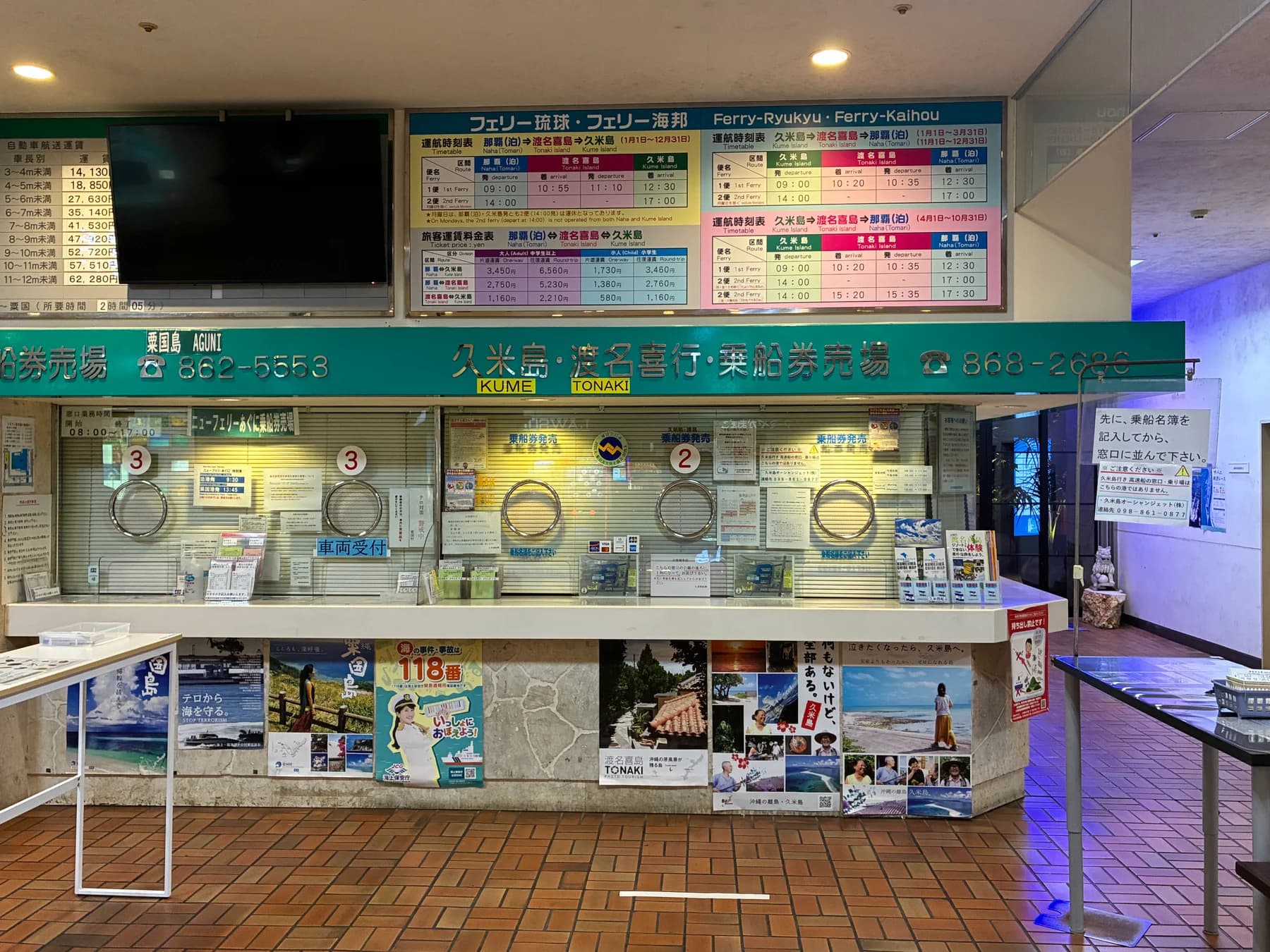
Ticket counter
The Kume Island and Tonaki Island ticket counter is location 2 on the first floor of Tomarin. Ticket-counter location 2 and boarding point 2 use separate numbering systems.
Berthing and boarding point
The ferries normally use boarding point 2 west of the Tomarin main building; it is separate from ticket-counter location 2. Use the vessel name and same-day port signs as the basis.

Day trip from Naha or overnight stay
A day trip is possible on days when the 09:00 departure from Naha arrives at Tonaki at 10:55 and the same day's 15:35 Naha-bound service calls at Tonaki Port. The interval from arrival at the port to return departure is 4 hr 40 min.
Boarding must be completed 15 minutes before departure, leaving 4 hr 25 min from arrival at the port to the boarding-completion deadline. Actual sightseeing time is shorter after allowing for travel on the island and the return to the port.
Under the regular timetable, a day trip is possible only on Friday and Saturday.
On days when a same-day return is not possible under the regular timetable, travelers from Naha need to stay at least one night. Book one of the three properties listed by the tourism association in advance by calling the property directly; same-day reservations are not accepted.
Getting around Tonaki Island
- Tonaki Island has no scheduled bus or taxi service.
- There are 4 standard rental bicycles and 4 electric-assist bicycles. Reservations are not accepted; bicycles are allocated in order of arrival.
- There is one rental car.
Lunch, cash, ATM and accommodation
Lunch
No restaurants currently serve lunch on Tonaki Island, so prepare it in Naha or elsewhere and bring it with you. Boxed lunches are sold irregularly at the terminal from around 11:00 only on days when a sales banner is displayed, until sold out, and availability is not guaranteed.
Cash payments
The Tonaki Village Tourism Association advises that accommodation facilities and shops on the island take payment in cash.
Tonaki Post Office ATM
Weekdays 08:45–17:30; Saturday 09:00–17:00. Sundays and public holidays: closed.
Accommodation
The three listed properties are Muranaka minshuku guesthouse, Akagawara no Yado Fukugiya, and Agarihama minshuku guesthouse. Each is reservation-only and must be booked in advance by calling the property directly. Same-day reservations are not accepted.
Check same-day operation
- Kume Shosen posts cancellations, conditional operation and timetable changes on its home page at about 07:30 on the day of travel. If the official website is unavailable, call Kume Shosen at 098-868-2686.
Tonaki Island ferry FAQ
What is the route and travel time from Naha to Tonaki Island?
Tomari Port in Naha to Tonaki Port takes 1 hr 55 min, and Tonaki Port to Kanegusuku Port on Kume Island takes 1 hr 20 min. Ferry Ryukyu and Ferry Kaiho operate alternately, and passengers cannot select the vessel.
Which services call at Tonaki Island every day?
The basic services calling every day are outbound service 1 from Naha and return service 1 from Kume Island. Service 2 can be used only on days when Tonaki Port times appear in the official timetable, and normally does not operate on Mondays.
On which days does the afternoon service call at Tonaki Island in 2026?
From April 1 through October 31, 2026, the 14:00 departure from Kume Island calls at Tonaki Port on Friday and Saturday. The Saturday call applies only in 2026.
Which timetable applies when there is a dock or special timetable?
A dated dock or special timetable takes priority over the regular and seasonal timetables.
When is a day trip from Naha to Tonaki Island possible?
From September 16 through October 31, 2026, a day trip is possible on Friday and Saturday under the regular timetable. The interval from arrival at the port to return departure is 4 hr 40 min.
How do I book, and when is the deadline?
Bookings are accepted by phone or at the counter from one month before travel. Call 098-868-2686 between 10:00 and 17:00; phone bookings close three days before departure. Kume Shosen does not list an official web-booking option.
How do same-day ticketing, payment, and boarding work?
On the day, complete the boarding application; travel-agency coupons must also be exchanged for boarding tickets at the counter. Cards can be used only for passenger tickets, while vehicle and cargo charges must be paid in cash. Boarding begins 60 minutes before departure and must be completed 15 minutes before departure.
What are the passenger, two-wheel and vehicle fares?
The current adult fare is ¥2,750 one way or ¥5,230 round trip; from October 1 it changes to ¥3,160 one way or ¥6,000 round trip. Every two-wheel and vehicle category is listed in the fare table above. Ask at booking how the driver's fare will be handled from October 1.
What transport, lunch, ATM, and accommodation are available on Tonaki Island?
There is no scheduled bus or taxi service; there are four standard bicycles, four electric-assist bicycles and one rental car. Bring lunch, and note that the ATM is available only on weekdays and Saturdays. The three accommodation properties require advance booking by calling them directly.
Where can I check ferry cancellations and operating changes?
Kume Shosen posts them on its home page at about 07:30 on the day of travel. If the site is unavailable, call 098-868-2686.