Naha to Kume Island by Ferry: Schedule, Fares, Booking and Vehicle Check-in
The regular ferry from Tomari Port in Naha to Kanegusuku Port on Kume Island takes about three to three and a half hours. This guide covers ticket pickup and boarding, separate check-in for cars, motorcycles and bicycles, collecting a vehicle after arrival, and getting from the port to the Eef area. It also includes observations from a site visit in July 2026.
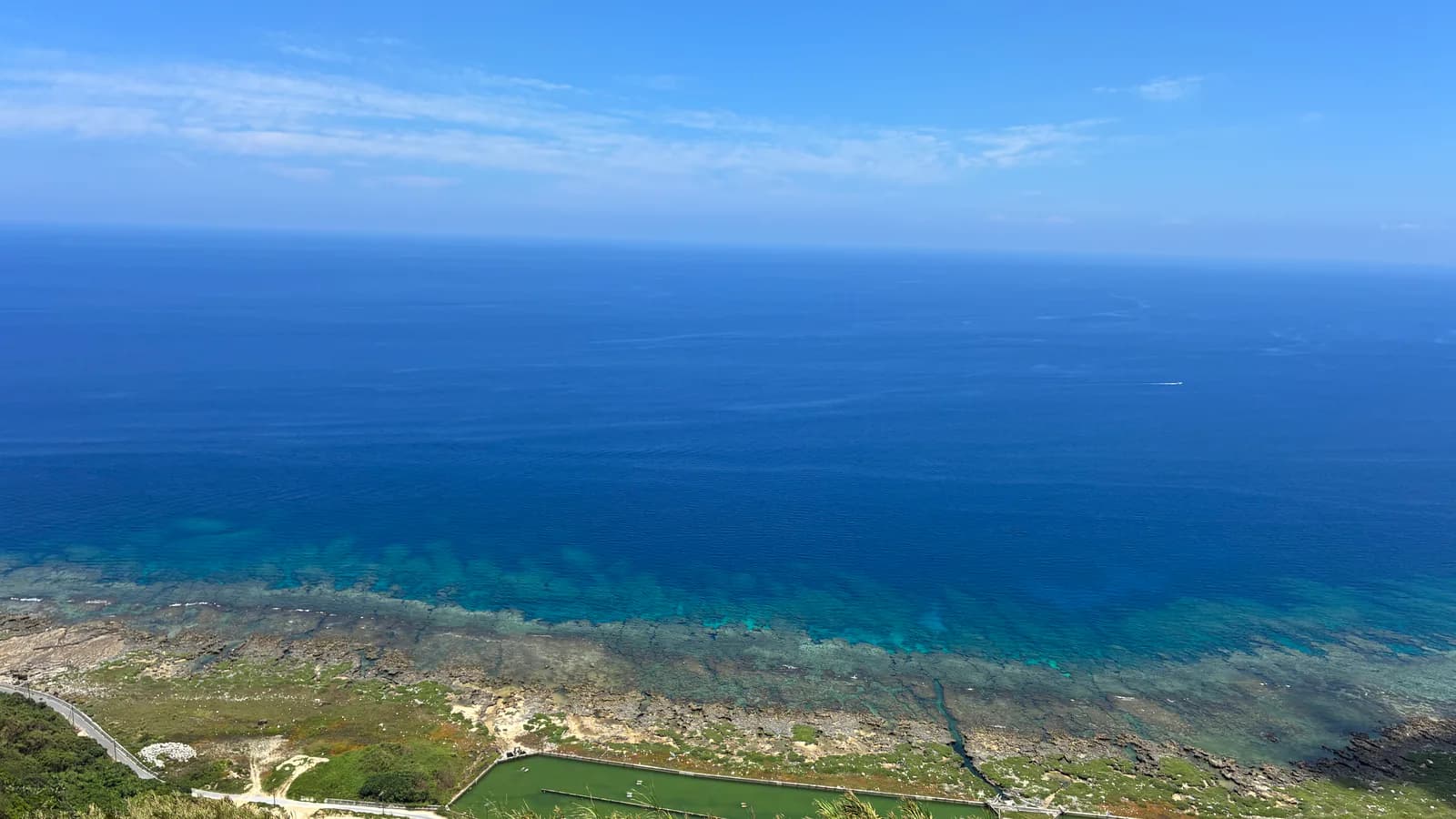
Dry-dock timetable and KO Jet operations
From August 31 through September 15, 2026, the dry-dock timetable replaces the normal and seasonal timetable. Kume Shosen operates one daily round trip with Ferry Ryukyu, leaving Tomari Port in Naha at 09:00 and Kanegusuku Port on Kume Island at 14:00; both directions call at Tonaki Island.
On September 19, 2026, the operator announced that KO Jet’s high-speed vessel Tsumugi had resumed service. Check the official website for operations on your travel date.
- Open official site->
- Open booking page →
Same-day cancellations or timetable changes may occur close to departure. If you cannot view Kume Shosen's operating status and notices online, call its Naha office.
Regular ferry schedule and fares
The tables below cover Kume Shosen’s regular ferry between Tomari Port and Kanegusuku Port. KO Jet is not included.
Dry-dock timetable (August 31–September 15, 2026)
| Direction | Sailing | Departure | Tonaki arrival | Tonaki departure | Arrival | Operating condition |
|---|---|---|---|---|---|---|
| Naha (Tomari Port) → Kume Island (Kanegusuku Port) | Sailing 1 | 09:00 | 10:55 | 11:10 | 12:30 | August 31–September 15, 2026 / Daily / Via Tonaki |
| Kume Island (Kanegusuku Port) → Naha (Tomari Port) | Sailing 1 | 14:00 | 15:20 | 15:35 | 17:30 | August 31–September 15, 2026 / Daily / Via Tonaki |
Kume Shosen operates one daily round trip with Ferry Ryukyu during this period. This table replaces the normal and seasonal timetable.
Normal and seasonal timetable (from September 16, 2026)
| Direction | Sailing | Departure | Tonaki arrival | Tonaki departure | Arrival | Notes |
|---|---|---|---|---|---|---|
| Naha (Tomari Port) → Kume Island (Kanegusuku Port) | Sailing 1 | 09:00 | 10:55 | 11:10 | 12:30 | April 1–October 31 / Daily / Via Tonaki |
| Naha (Tomari Port) → Kume Island (Kanegusuku Port) | Sailing 2 | 14:00 | — | — | 17:00 | April 1–October 31 / Tue, Wed, Thu, Fri, Sat, Sun / Direct |
| Kume Island (Kanegusuku Port) → Naha (Tomari Port) | Sailing 1 | 09:00 | 10:20 | 10:35 | 12:30 | April 1–October 31 / Daily / Via Tonaki |
| Kume Island (Kanegusuku Port) → Naha (Tomari Port) | Sailing 2 | 14:00 | — | — | 17:00 | April 1–October 31 / Tue, Wed, Thu, Sun / Direct |
| Kume Island (Kanegusuku Port) → Naha (Tomari Port) | Sailing 2 | 14:00 | 15:20 | 15:35 | 17:30 | April 1–October 31 / Fri, Sat / Via Tonaki |
| Naha (Tomari Port) → Kume Island (Kanegusuku Port) | Sailing 1 | 09:00 | 10:55 | 11:10 | 12:30 | November 1–March 31 / Daily / Via Tonaki |
| Naha (Tomari Port) → Kume Island (Kanegusuku Port) | Sailing 2 | 14:00 | — | — | 17:00 | November 1–March 31 / Tue, Wed, Thu, Fri, Sat, Sun / Direct |
| Kume Island (Kanegusuku Port) → Naha (Tomari Port) | Sailing 1 | 09:00 | 10:20 | 10:35 | 12:30 | November 1–March 31 / Daily / Via Tonaki |
| Kume Island (Kanegusuku Port) → Naha (Tomari Port) | Sailing 2 | 14:00 | — | — | 17:00 | November 1–March 31 / Tue, Wed, Thu, Fri, Sat, Sun / Direct |
Normally only the first sailing operates on Mondays. A newer date-specific or temporary notice takes priority over this table.
On September 21, 2026, extra second sailings will depart from both Naha and Kume Island at 14:00. Those two departure times are the only details confirmed by the official notice; arrival times, calls at Tonaki Island and the vessels to be used remain unconfirmed, so no inferred details have been added.
Same-day cancellations and timetable changes can occur until shortly before departure. If Kume Shosen’s Operating Status and News pages are unavailable online, call the Naha office.
Fare revision from October 1, 2026The fares shown apply through September 30, 2026. Revised fares apply from October 1.
Passenger fares
| Passenger | One way | Round trip |
|---|---|---|
| Adult | ¥3,450 | ¥6,560 |
| Child | ¥1,730 | — |
Child round-trip totalThe amount is not shown because it could not be determined from the Kume Shosen information reviewed. Ask for the total payable amount when booking a round trip.
Vehicle, motorcycle and bicycle fares
| Vehicle type | Size or engine class | One-way fare | Reservation |
|---|---|---|---|
| Bicycle | — | ¥1,210 | Required |
| Motorcycle | 50cc and under | ¥2,400 | Required |
| Motorcycle | over 50cc | ¥3,620 | Required |
| Car | Under 3 m | ¥12,300 | Required |
| Car | 3–4 m | ¥15,250 | Required |
| Car | 4–5 m | ¥19,690 | Required |
| Car | 5–6 m | ¥29,330 | Required |
| Car | 6–7 m | ¥38,230 | Required |
| Car | 7–8 m | ¥45,000 | Required |
| Car | 8–9 m | ¥51,330 | Required |
| Car | 9–10 m | ¥57,620 | Required |
| Car | 10–11 m | ¥62,640 | Required |
| Car | 11–12 m | ¥67,880 | Required |
Vehicle and driver fareThe published information did not confirm whether the vehicle fare includes the passenger fare for one driver. Ask for the combined vehicle-and-driver total when booking.
- Check this month's schedule (Official site) →
Booking, ticket pickup and boarding
Passenger booking and boarding
Tickets can be reserved by phone or at the counter from one calendar month before travel. Passengers not taking a vehicle check in at the Kume Island and Tonaki Island counter on the first floor of Tomarin, then proceed to the usual boarding area west of the main building.
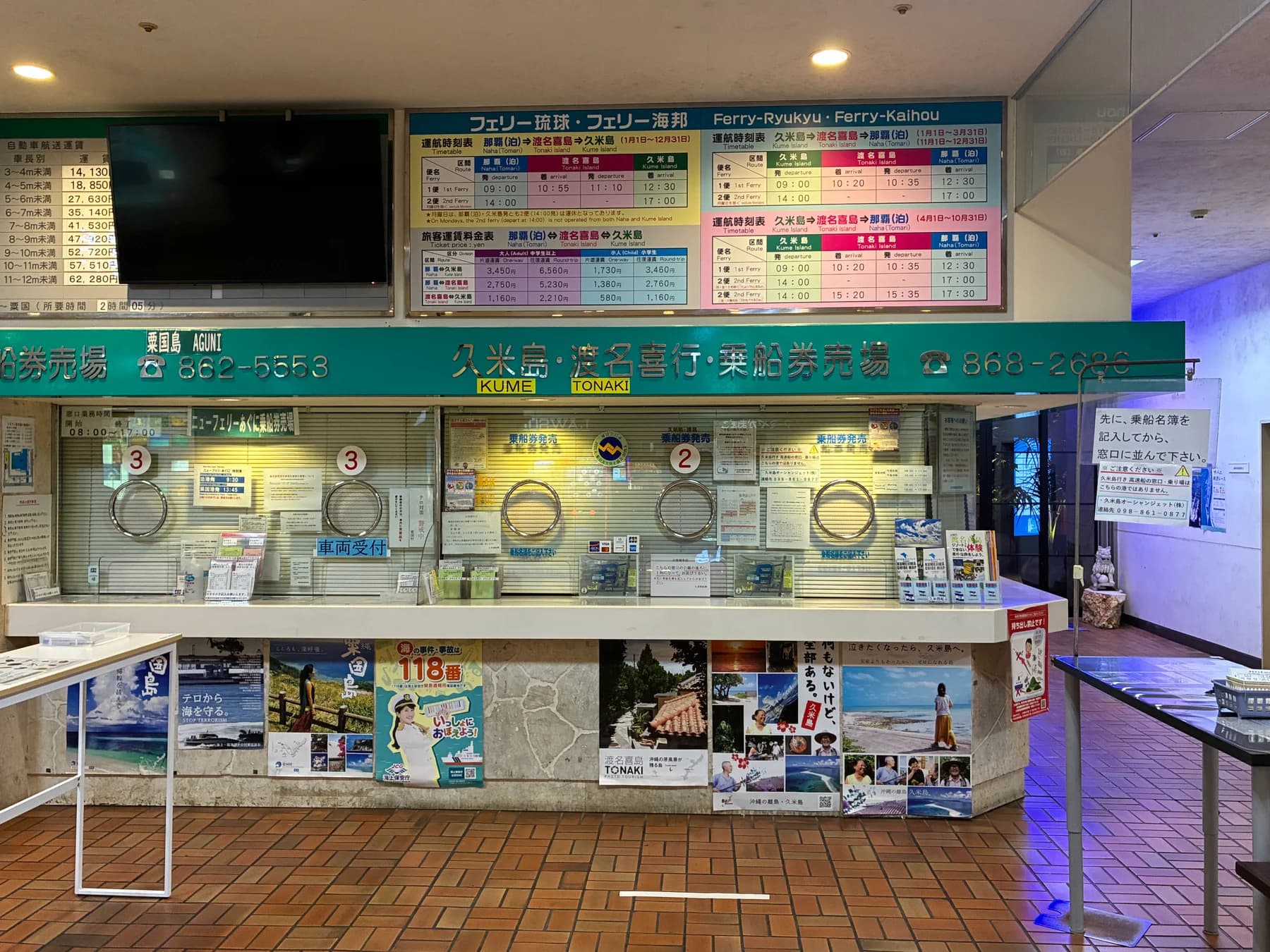
When to arrive
Boarding starts 60 minutes before departure and must be completed 15 minutes before departure. The 15-minute cutoff is not the time to arrive at the port.
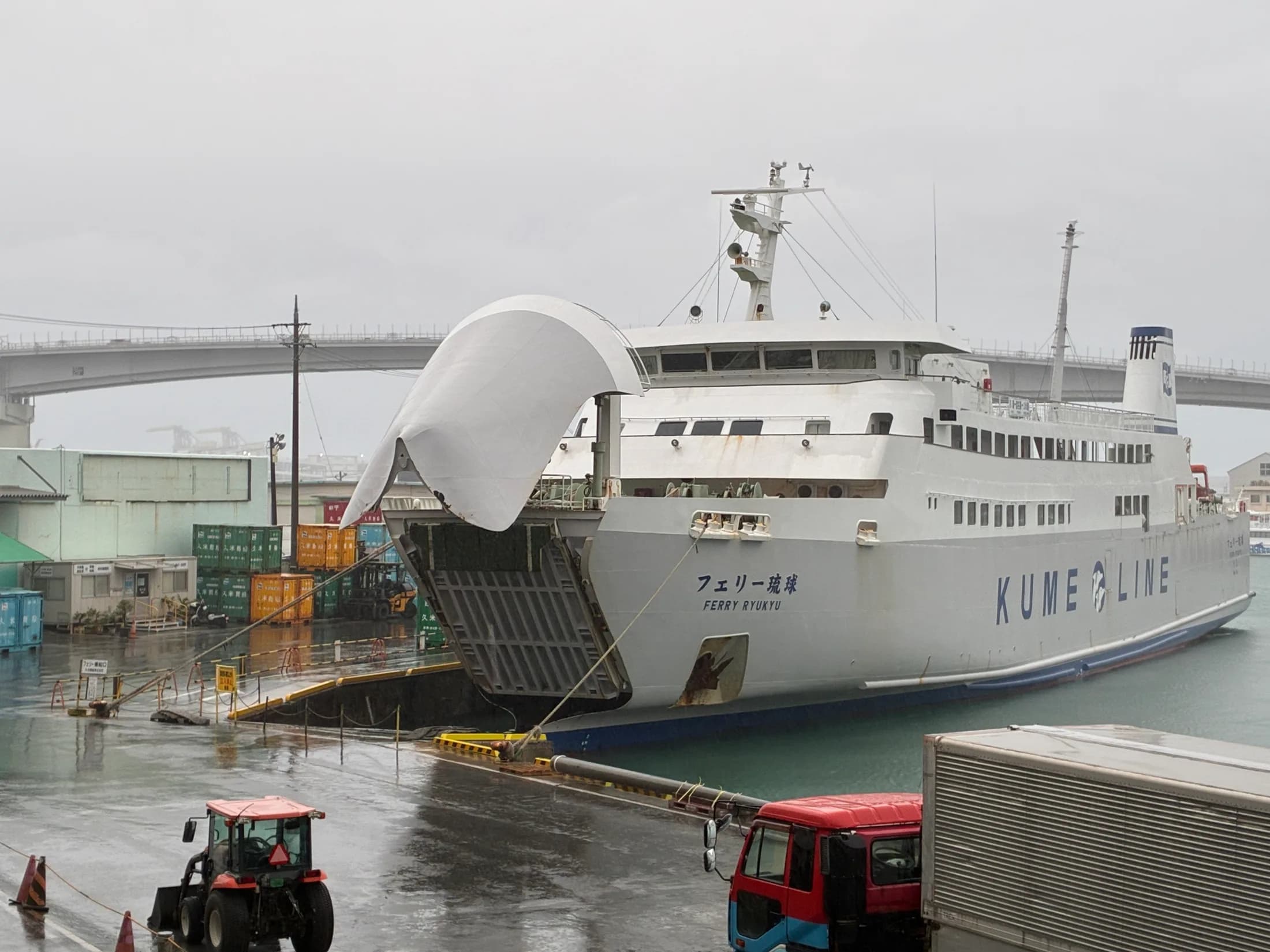
Cars, motorcycles and bicycles
Cars, motorcycles and bicycles must be reserved in advance. Provide the sailing, vehicle type, and the applicable vehicle length or engine displacement, then go to Kume Shosen’s cargo and vehicle office by the stated check-in time.
- Open reservation page →
Ferry trips are easier with an overnight stay | Choosing island transport
The regular ferry takes about three to three and a half hours each way, and some days have no afternoon sailing. An itinerary with enough time for sightseeing on the island is easier to plan with at least one overnight stay.
On one motorcycle trip during a site visit in July 2026, the journey from Kanegusuku Port to the Eef area took about 15 minutes. Accommodation, restaurants and convenience stores are concentrated around Eef.
Kume Shosen’s regular ferry is an option when taking a car or motorcycle, while a flight is an option when shorter travel time matters. KO Jet is a separate service; its operator announced on September 19, 2026 that service had resumed. Check operations and booking on the official website for your travel date.
Taking a car, motorcycle or bicycle on the ferry
Vehicles must be reserved in advance. Kume Shosen’s cargo and vehicle office at Tomari Port is separate from the passenger counter on the first floor of Tomarin and from the usual boarding area.
No fixed vehicle check-in time could be confirmed. Go to the office by the time provided when booking.
Reserve a vehicle space and check-in time
Give the sailing, vehicle type, and applicable vehicle length or engine displacement to reserve vehicle space and get the fare and check-in time.
Go to Kume Shosen’s cargo and vehicle office
It is in a separate building from the passenger ticket counter.
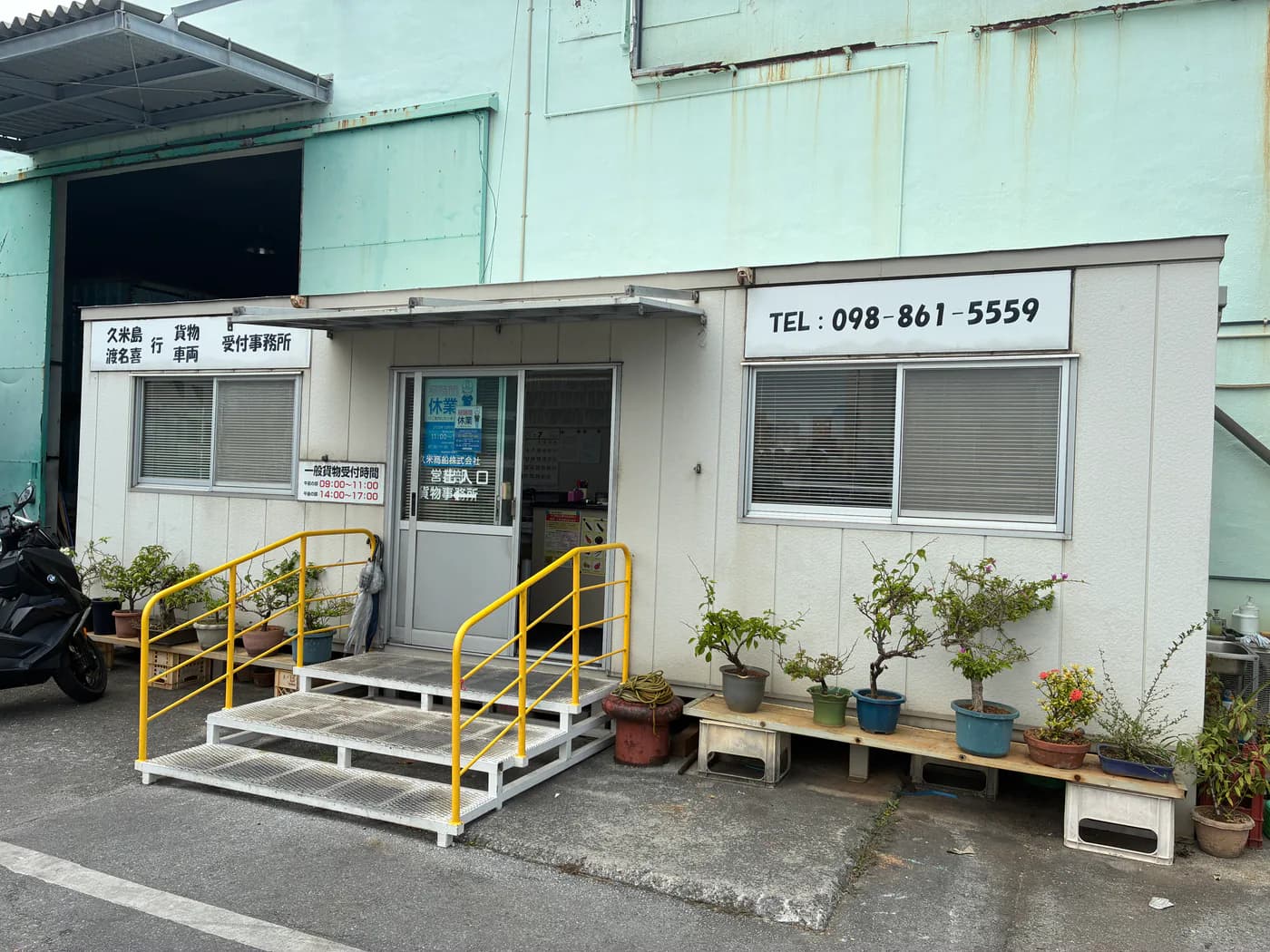
Cars, motorcycles and bicycles are checked in here, separately from the passenger ticket counter. Follow the staff’s instructions after check-in
During the site visit on July 22, 2026, the motorcycle key was handed to a crew member after check-in, and the crew member took the motorcycle aboard.
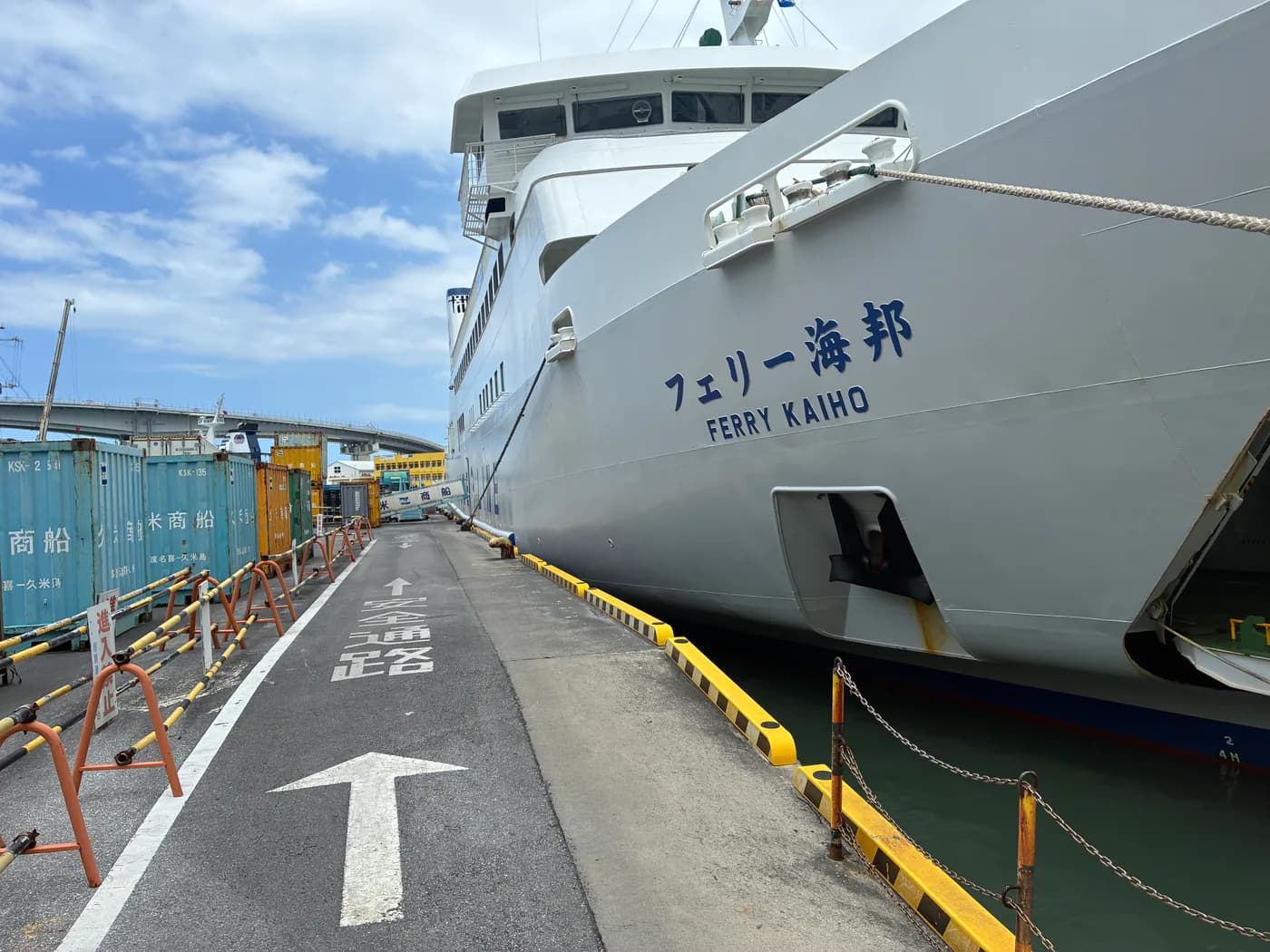
The vehicle lane at Tomari Port during the motorcycle trip observed on July 22, 2026. Board from the passenger area
After handing over the vehicle, follow the boarding instructions for passengers.
Collect the vehicle at Kanegusuku Port
On the same trip, the motorcycle was collected after disembarkation once a crew member brought it ashore.
Use the cargo and vehicle office at Kanegusuku Port for the return trip
Complete the return procedure at the cargo and vehicle office at Kanegusuku Port. No fixed time is shown; arrive by the time provided when booking the return trip.
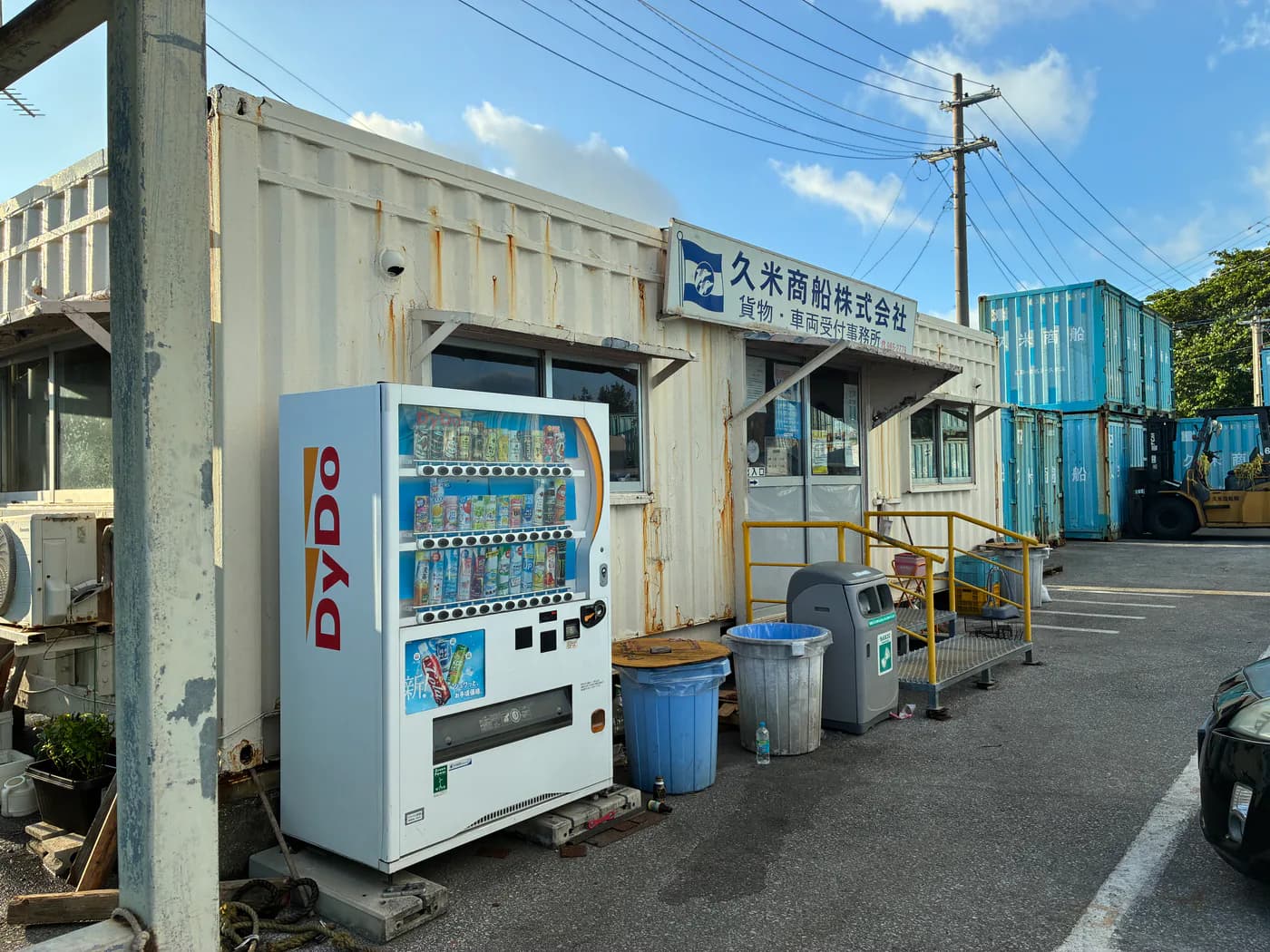
Use this office when taking a vehicle on the return ferry from Kume Island.
Add a Hatenohama tour to your itinerary
When visiting Hatenohama, plan your Kume Island arrival and departure times, overnight stay and tour date together. Tours that meet on Kume Island are separate from the Naha-departure Klook product below.
Hatenohama tour operations and content depend on sea conditions. Details of the Klook product and its sea-transport cautions are summarized in the product card.
After arriving at Kanegusuku Port | Waiting room, town bus and rental cars
Passenger terminal
- Ticket counter
- Area for completing boarding forms
- Toilets
- Infant-feeding facilities
- Kumejima Town public Wi-Fi
- Cargo collection area
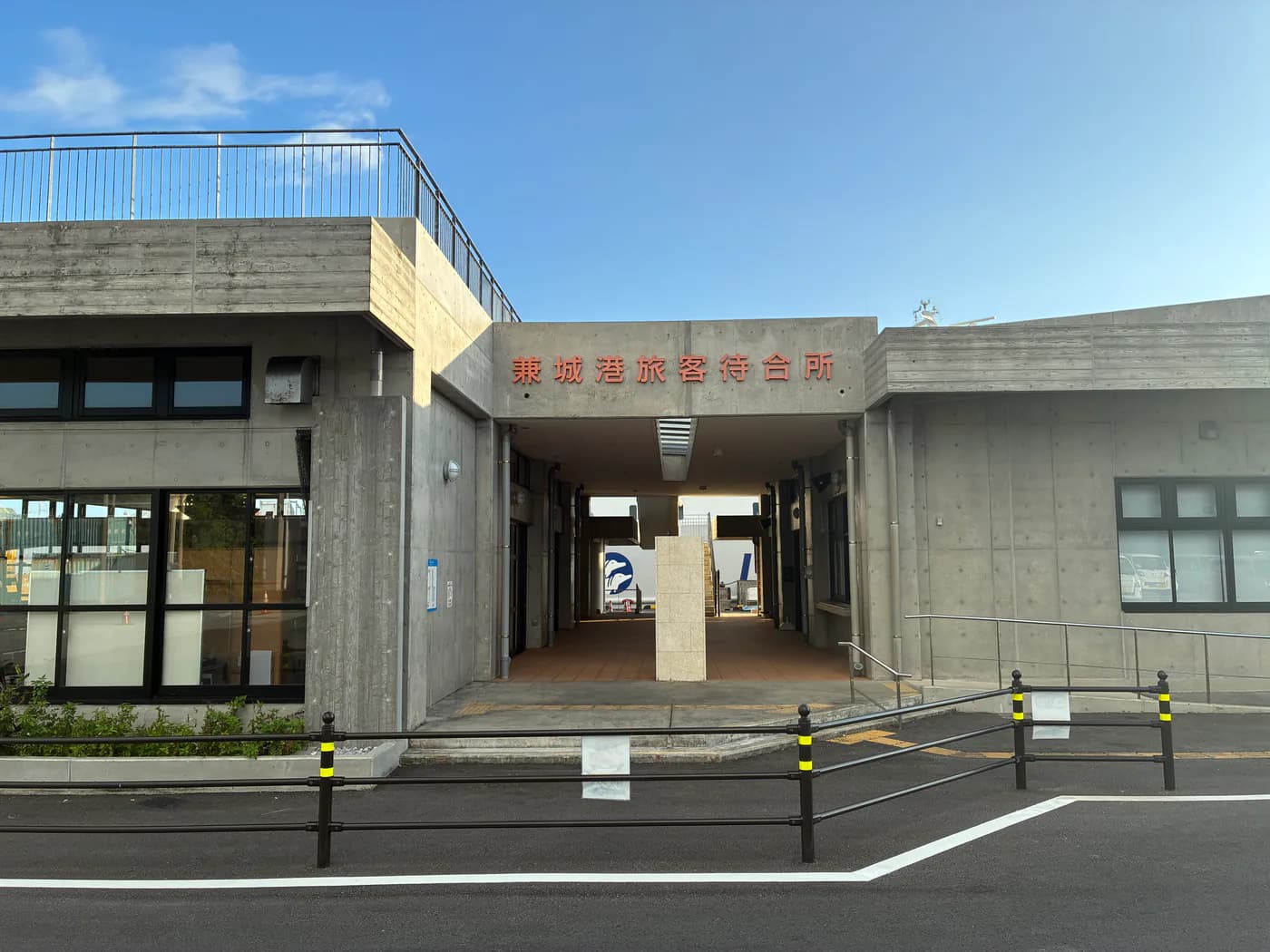
Municipal bus
- Official stop name: 兼城港(ターミナル前) — Kanegusuku Port (in front of the terminal)
- To the left after walking between the waiting room and ticket office
- Wait at the stop from about five minutes before the scheduled time
- Buses normally run on time
- Buses do not wait for delayed flights or other services
- Timetable: July 17–August 31 edition through August 31, 2026; September 1–30 edition from September 1 through 30, 2026
- Contactless payment accepted
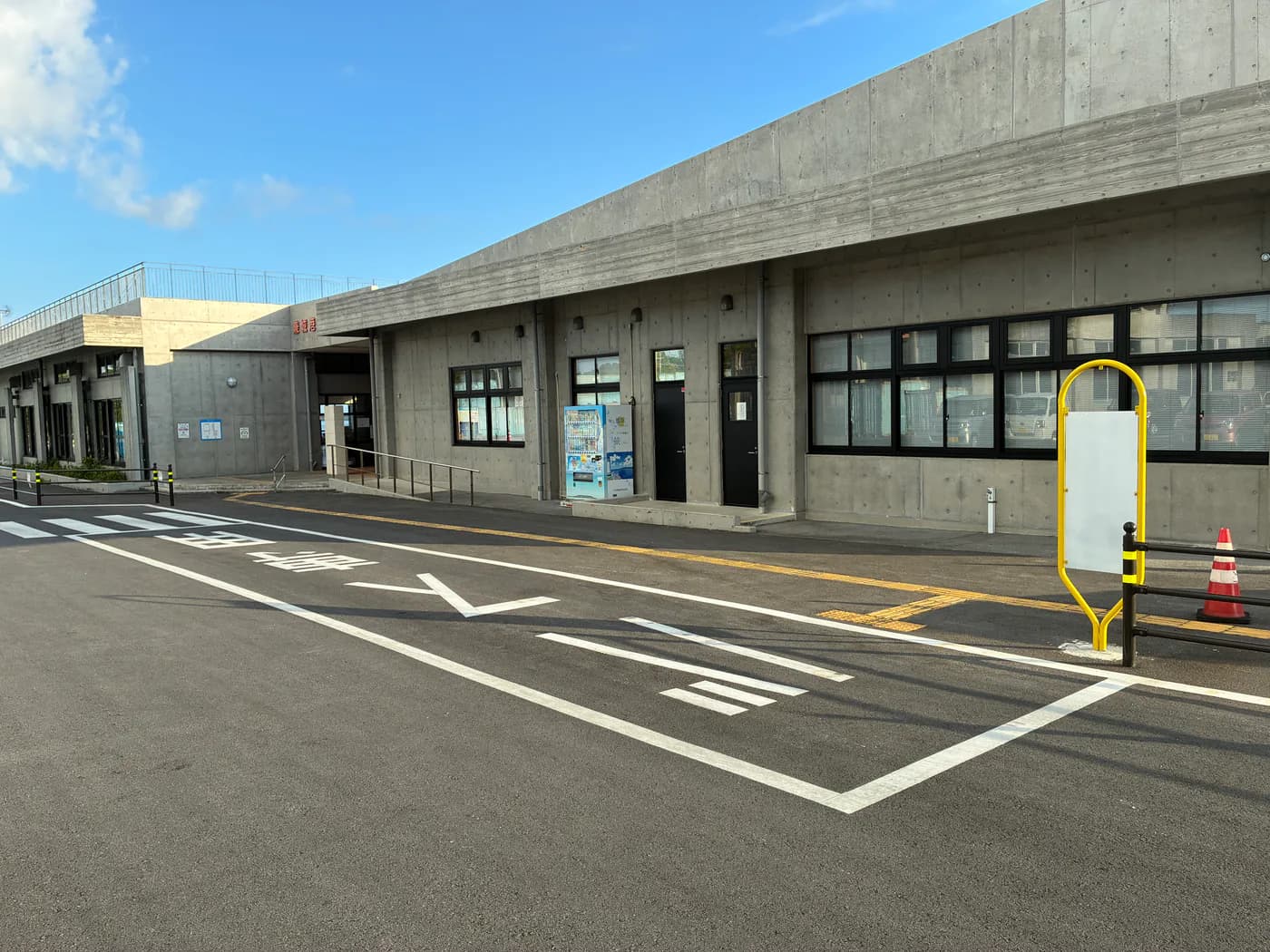
Rental cars
- No shared rental-car counter for all companies
- East Rent a Car (ABC Rent a Car) is one operator
- Kanegusuku Port transfers only around ferry arrivals and departures
- One-way drop-off destination: airport only
- Mangrove Rent a Car: no port transfer
- Mangrove Rent a Car: no pickup or return at Kanegusuku Port since April 1, 2025
- Set the pickup and return locations, transfer time, additional charges and check-in method when booking
Frequently asked questions
Where are the latest ferry timetable and cancellation updates published?
From August 31 through September 15, 2026, the dry-dock timetable takes priority: Kume Shosen operates one daily round trip with Ferry Ryukyu, leaving Tomari Port in Naha at 09:00 and Kanegusuku Port on Kume Island at 14:00, with both directions calling at Tonaki Island. For September 21, only the extra second sailings’ 14:00 departures from Naha and Kume Island are confirmed; arrival times, ports of call and vessel names remain unconfirmed. Kume Shosen’s Operating Status and News pages provide cancellations and same-day changes.
How early are ferry reservations accepted?
Reservations open one calendar month before the travel date and can be made by phone or at the counter. If you are taking a car, motorcycle or bicycle, the details to confirm differ from a passenger-only booking, so provide the vehicle type and engine size.
Where are tickets collected and where is the boarding area at Tomarin?
Use the Kume Island and Tonaki Island ticket counter on the first floor of Tomarin, then proceed to the usual boarding area west of the main building. Confirm the vessel name and boarding-point signs on the day. Cars, motorcycles and bicycles are checked in separately at Kume Shosen’s cargo and vehicle office.
When must passengers without a vehicle be on board?
Boarding starts 60 minutes before departure and must be completed 15 minutes before departure. The 15-minute cutoff is not the time to arrive at the port. Allow enough time for ticket pickup and the walk to the boarding area.
Can cars, motorcycles or bicycles be taken on the ferry?
Cars, motorcycles and bicycles can be carried but must be reserved in advance. Provide the sailing, vehicle type, and applicable vehicle length or engine displacement, then go to the cargo and vehicle office by the stated time. This office is separate from the passenger counter.
How is a motorcycle loaded and collected at Kanegusuku Port?
During the site visit on July 22, 2026, the motorcycle key was handed to a crew member after check-in, and the motorcycle was collected at Kanegusuku Port after a crew member brought it ashore. This is not a fixed procedure for every sailing. Follow staff instructions on the day.
Where is vehicle check-in for the return trip?
Complete the return procedure at the cargo and vehicle office at Kanegusuku Port. No fixed check-in time could be confirmed. Go there by the time provided when booking the return trip.
Where is the town-bus stop at Kanegusuku Port, and how does rental-car pickup work?
The official town-bus stop name is Kanegusuku Port (in front of the terminal). There is no shared rental-car counter for all companies at the port. Decide the pickup and return locations, transfer time and additional charges when booking.
How should travelers choose between the regular ferry and a flight?
Options include Kume Shosen’s regular ferry from Naha Tomari Port and flights. Use the regular ferry to take a car or motorcycle, or a flight if journey time is the priority. KO Jet’s Tsumugi is a separate service; its operator announced on September 19, 2026 that service had resumed. Check operations and booking for your travel date on the KO Jet official website.