Queen Zamami (high-speed passenger boat)
- Travel time
- 50 minutes direct / 70 minutes via Zamami
- Vehicles
- Not available
- Adult one way
- ¥3,950 one way
- From Naha
- 2 a day
Aka Island ferry | September 2026 timetable
Compare Queen Zamami and Ferry Zamami 3, every September 2026 service, standard fares, Tomari Port boarding and transport after arrival on one page.
From Naha, Queen Zamami runs twice a day and Ferry Zamami 3 once a day in September. The calculated upper limit for a Nishibama day trip is about 3 hours 10 minutes to 6 hours, depending on the vessel combination. Do not plan around the discontinued public-bus trial.
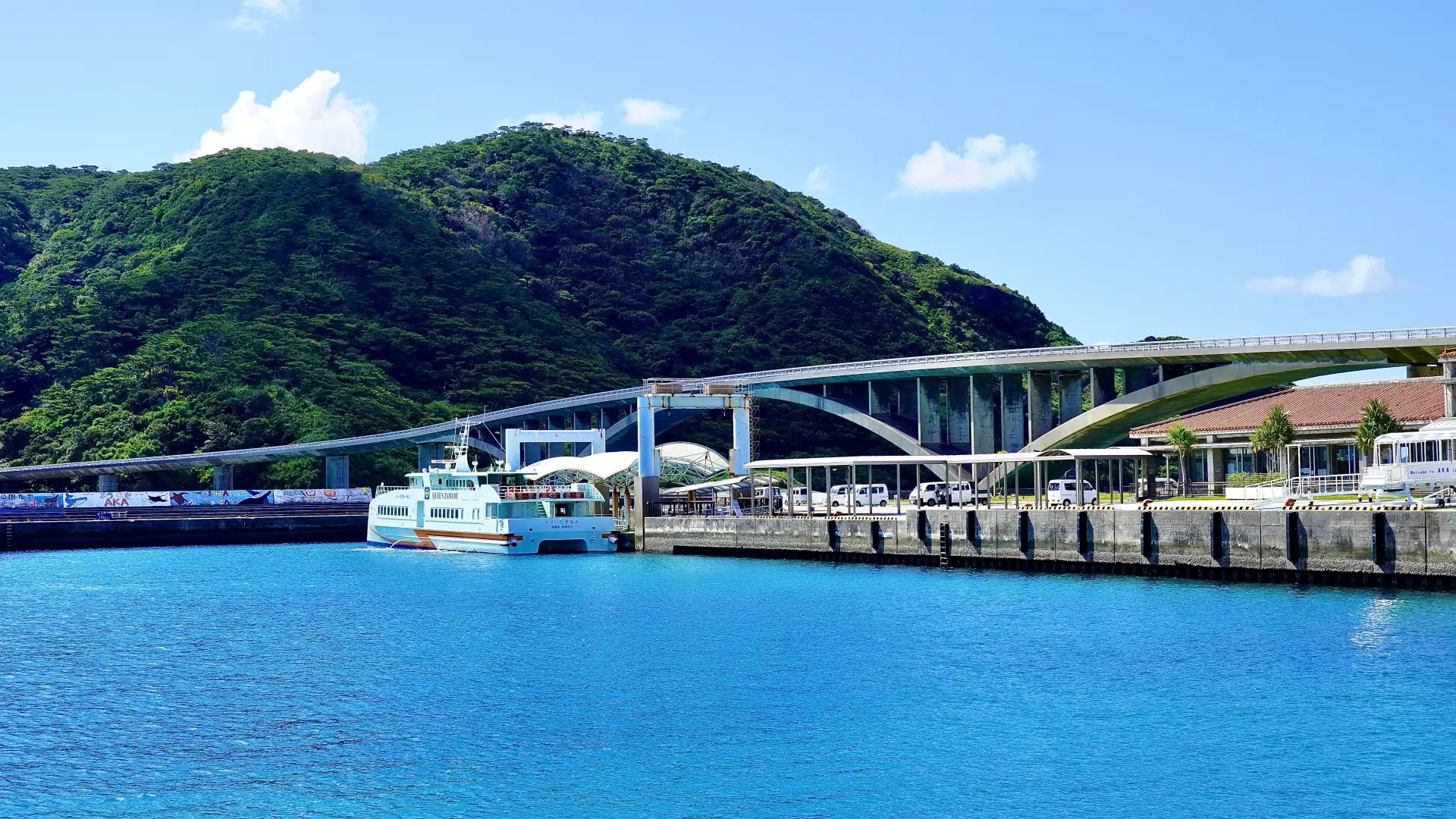
Queen Zamami suits travelers who want a shorter crossing; Ferry Zamami 3 suits travelers taking a car or motorcycle. The order of calls at Aka and Zamami varies by service.
The following is the official timetable for September 1–30, 2026. Queen Zamami has two services a day and Ferry Zamami 3 has one, with a different order of calls at Aka and Zamami depending on the service.
Swipe or scroll horizontally to read the full table.
| Vessel | Service | Direction | Port order and times |
|---|---|---|---|
| Queen Zamami | Service 1 outbound | From Naha | Tomari Port, Naha dep. 09:00 → Zamami Port arr. 09:50 / dep. 10:00 → Aka Port arr. 10:10 |
| Queen Zamami | Service 1 return | From Aka | Aka Port dep. 10:20 → Tomari Port, Naha arr. 11:10 |
| Queen Zamami | Service 2 outbound | From Naha | Tomari Port, Naha dep. 16:00 → Aka Port arr. 16:50 |
| Queen Zamami | Service 2 return | From Aka | Aka Port dep. 17:00 → Zamami Port arr. 17:10 / dep. 17:20 → Tomari Port, Naha arr. 18:10 |
| Ferry Zamami 3 | Outbound | From Naha | Tomari Port, Naha dep. 10:00 → Aka Port arr. 11:30 / dep. 11:45 → Zamami Port arr. 12:00 |
| Ferry Zamami 3 | Return | From Aka | Zamami Port dep. 15:00 → Aka Port arr. 15:15 / dep. 15:30 → Tomari Port, Naha arr. 17:00 |
Board no later than 10 minutes before departure.Use “Today's operating status” at the top for same-day cancellations or time changes.
Operating vessels, departure times and port-call order vary by date in October. Select your travel date to view the applicable schedule.
October 16 & 19: Ferry Zamami 3 suspended
October 20–31: Queen Zamami suspended for dry dock
October 23, 24, 25 & 31: Special service
Select your travel date to view operating vessels, estimated day-trip time, and departure and arrival times.
These are the standard fares between Naha and Aka Port. A separate ¥100 Churashima Tax applies.
Swipe or scroll horizontally to read the full table.
| Vessel | Category | One way | Round trip from Naha |
|---|---|---|---|
| Ferry Zamami 3 | Adult | ¥2,900 | ¥5,510 |
| Ferry Zamami 3 | Child | ¥1,450 | ¥2,760 |
| Queen Zamami | Adult | ¥3,950 | ¥7,510 |
| Queen Zamami | Child | ¥1,980 | ¥3,760 |
The round-trip discount applies when both journeys use the same vessel type and the return is within 14 days, counting the outbound boarding date. Mixed vessel types are priced as two one-way journeys. The child fare applies through elementary-school age. One child aged 5 or younger travels free with each adult; the child fare applies from the second child.
Children through junior high school and travelers with disabilities are exempt from the Churashima Tax.
September 2026 offers four outbound-and-return combinations. The estimates allow 20 minutes to walk from Aka Port to Nishibama and require boarding 10 minutes before the return departure.
Longest option
These are calculated upper limits, not estimates of safe swimming time.
If the outbound and return use different vessel types, book and price them as separate one-way journeys. See Standard passenger fares above.
With a boarding QR code, present it at the gate without collecting a paper ticket. If you need to buy or collect a paper ticket, return earlier: the booking screen says ticket purchases must be completed 30 minutes before departure, which is 20 minutes earlier than the table's boarding-based estimate.
An overnight stay lets you visit Nishibama without cutting the day short for the final service and makes it easier to add Geruma and Fukaji islands or a Mitsushima trip the next morning. Accommodation and ferry tickets must be booked separately.
Compare accommodation around Aka Island when you do not want to plan the whole visit around the final return service.
For September, plan the walk to Nishibama and your luggage and cash needs without relying on the public-bus trial.
The beach is 1.6 km from Aka Port. Allow about 40 minutes for the round trip on foot, and account for the sun and your return sailing.
Arrange bicycle rental or an operator pickup in advance. Providers do not publish one common travel time, so this page does not show a fixed bicycle or pickup duration.
The free trial ended on August 30, 2026. Plan to walk or use transport arranged in advance.
Luggage storage has eligibility, quantity and opening-hour conditions. They are listed in the details below.
A Japan Post Bank ATM is available. Opening hours and possible temporary closures are listed below.
The fixed information is provided here. Open only the topics you need.
General online booking is normally available from 55 days before travel through the day before departure. If there are more than 20 days until boarding, the first step is a provisional booking; follow the later instructions from Zamami Village to pay by credit card.
If boarding is within 20 days, pay when booking. Payment confirms the booking and a boarding QR code is sent.
You do not need a paper ticket from the counter. Present the QR code at the boarding gate.
Telephone booking is available from the calendar date one month before travel through the day before departure, between 10:00–17:00. Same-day telephone booking is not available; call 098-868-4567.
If a telephone booking or booking change requires counter processing, bring a passenger application form and your booking number. Board no later than 10 minutes before departure.
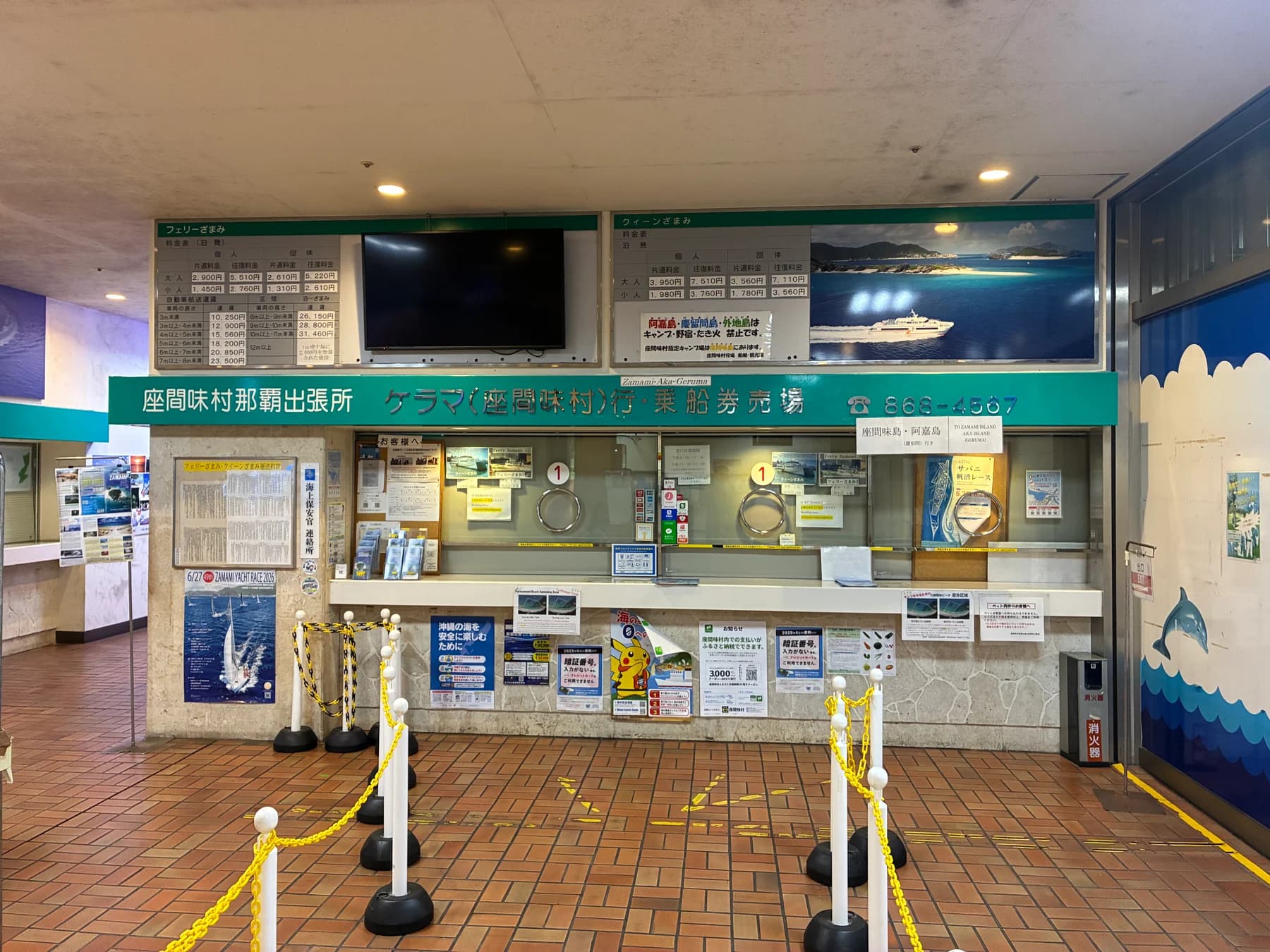
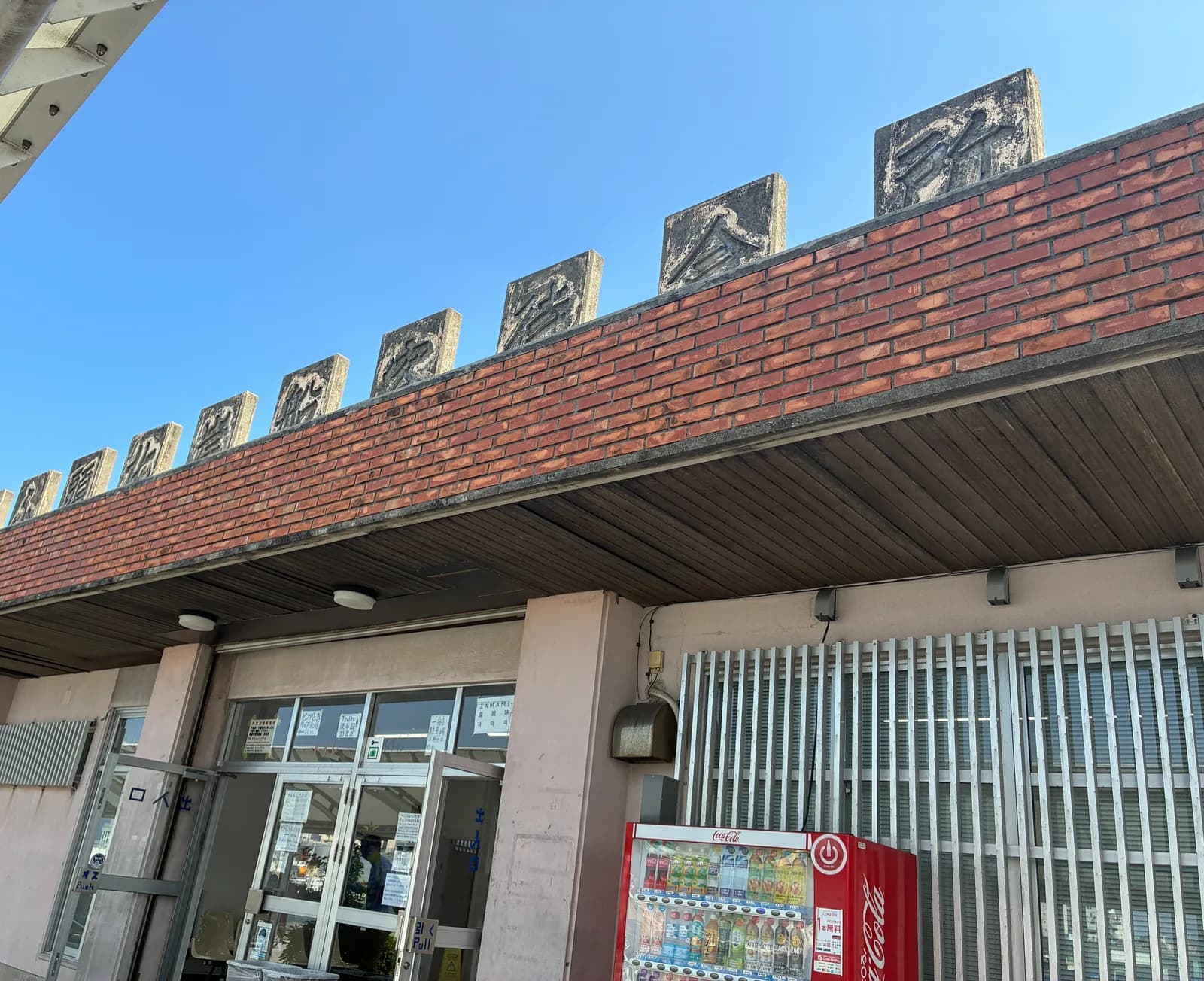
When payment or ticket issuance at a counter is required, use location ① on the first floor of Tomarin. Queen Zamami tickets are also issued at location ⑥ in the North Shore Passenger Waiting Room. If you have a boarding QR code, no counter-issued paper ticket is required.
South Wharf · Normally No.6
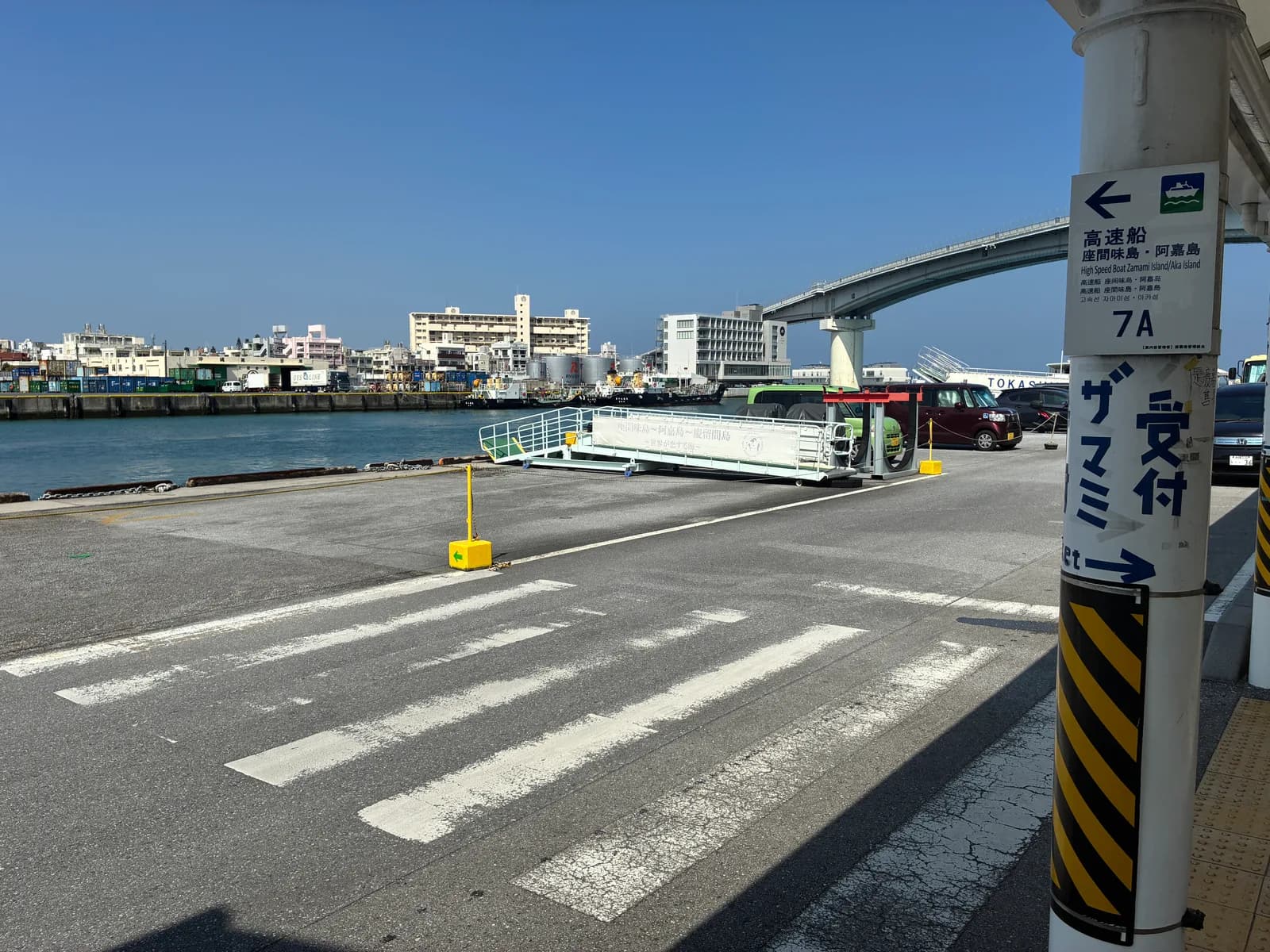
North Wharf · Normally No.7A
The North Wharf boarding point for Queen Zamami is about a 10-minute walk from the first-floor Tomarin counter. Follow same-day signs inside the port.
Swipe or scroll horizontally to read the full table.
| Vessel | Category | One way | Round trip from Naha |
|---|---|---|---|
| Ferry Zamami 3 | Adult group fare | ¥2,610 | ¥5,220 |
| Ferry Zamami 3 | Child group fare | ¥1,310 | ¥2,610 |
| Ferry Zamami 3 | Adult disability fare | ¥1,450 | ¥2,900 |
| Ferry Zamami 3 | Child disability fare | ¥730 | ¥1,450 |
| Queen Zamami | Adult group fare | ¥3,560 | ¥7,110 |
| Queen Zamami | Child group fare | ¥1,780 | ¥3,560 |
| Queen Zamami | Adult disability fare | ¥1,980 | ¥3,950 |
| Queen Zamami | Child disability fare | ¥990 | ¥1,980 |
Group fares apply to groups of 15 or more. Disability fares require a Physical Disability Certificate, Mental Disability Certificate or Rehabilitation Certificate issued by the Japanese government. The discount also applies to a caregiver accompanying a holder of a Category 1 Physical Disability Certificate, Category 1 Rehabilitation Certificate or Grade 1 Mental Disability Certificate.
Swipe or scroll horizontally to read the full table.
| Category | Tomari–Aka / Tomari–Zamami | Aka–Zamami |
|---|---|---|
| Under 3 m | ¥10,250 | ¥1,010 |
| 3 m or more and under 4 m | ¥12,900 | ¥1,260 |
| 4 m or more and under 5 m | ¥15,560 | ¥1,520 |
| 5 m or more and under 6 m | ¥18,200 | ¥1,780 |
| 6 m or more and under 7 m | ¥20,850 | ¥2,030 |
| 7 m or more and under 8 m | ¥23,500 | ¥2,290 |
| 8 m or more and under 9 m | ¥26,150 | ¥2,550 |
| 9 m or more and under 10 m | ¥28,800 | ¥2,810 |
| 10 m or more and under 11 m | ¥31,460 | ¥3,060 |
| 11 m or more and under 12 m | ¥34,110 | ¥3,330 |
| 12 m or more (additional charge for each extra 1 m) | ¥2,600 | ¥250 |
| Bicycle | ¥430 | ¥110 |
| Moped | ¥870 | ¥230 |
| Motorcycle | ¥1,730 | ¥350 |
For the 12 m or more row, the amount is added for each extra 1 m to the 11 m or more and under 12 m charge. Cars require advance booking, and there is no round-trip discount for vehicles. Ask Zamami Village about special vehicles.
Islanders Net members can leave up to three pieces of luggage free of charge at Sango Yuntakukan Visitor Center. Ask the center about availability and charges for non-members.
Published hours are 09:00–17:00 from April through October and 09:00–16:00 from November through March.
It is normally open every day but may close temporarily.
Aka Post Office has an ATM. Prepare the cash you need during opening hours: 8:45–17:30 on weekdays and 9:00–17:00 on Saturdays, Sundays and public holidays.
The ATM may be temporarily unavailable.
Aka Bridge provides a road connection to Geruma Island and onward to Fukaji Island. Zamami Island is not connected by road; use Mitsushima. If the permanent timetable differs from information for your travel date, follow the date-specific information.
Aka Port–Zamami Port runs four round trips a day and takes 15 minutes. The one-way fare is ¥500 for an adult or ¥250 for a child. Reservations are not accepted; buy a ticket on the day and use the Queen Zamami floating pier at both ports.
Aka Port–Aharen Port operates only when booked and carries up to 12 passengers. It takes 20 minutes. The boat fare is ¥1,000 for everyone, with no separate child fare. The ¥100 environmental cooperation tax applies only to high-school students and older: the one-way total is ¥1,100 for that group and ¥1,000 for junior-high-school students and younger. Book from one month before travel through 17:00 on the day before with the Zamami Island Vessel Office (098-987-2614, 8:30–17:00).
There are toilets, showers and the three-level Nishibama Terrace. Use same-day signs for shower charges, lifeguard coverage, swimming zones, jellyfish nets and sea conditions.
The Ministry of the Environment gives a period from late April through October. It does not guarantee a lifeguard or safe swimming on every date.
The free public-bus trial ended on August 30, 2026. No official announcement confirming continued service from September has been found, so it is safer not to base an itinerary on the bus.
Queen Zamami is scheduled to enter dock from October 20 through December 3, 2026. Use the official timetable for the month you plan to travel during this period.
Eight common planning questions, each linked to the relevant details on this page.
No. The times on this page apply to September 1–30, 2026. See every September service.
General online booking is normally open from 55 days before travel through the day before departure. With a paid boarding QR code, you do not need a paper ticket from the counter. See booking procedures.
Queen Zamami normally uses North Wharf point 7A, while Ferry Zamami 3 normally uses South Wharf point 6. See counters and boarding points.
The free trial ended on August 30, 2026. For September, plan to walk or arrange transport in advance. See the arrival essentials.
The calculated upper limit for time at Nishibama ranges from about 3 hours 10 minutes to 6 hours. An overnight stay is easier if you also want to visit Geruma or Fukaji Island or use Mitsushima the next morning. Compare all four day-trip combinations.
There are four round trips a day. The crossing takes 15 minutes and costs ¥500 for an adult or ¥250 for a child; buy the ticket on the day. See the permanent timetable.
Islanders Net members can leave up to three bags free at Sango Yuntakukan Visitor Center, and Aka Post Office has an ATM. See hours and conditions.
Ferry Zamami 3 carries vehicles. Cars require advance booking, and the one-way charge includes one driver. See vehicle charges.
Fixed information and the September 2026 timetable were checked on August 31, 2026. Day-trip calculations and the permanent Mitsushima timetable were checked on September 2, 2026. The linked official pages are in Japanese.